Employing traditional construction and industrial materials, such as wood, steel, wool felt and enamel paint, Ricardo Rendón (b. Mexico, 1970) methodically investigates how they interact with each other and their environment. Above all, he delves into how these materials can be transformed by means of a calculated artistic intervention. Thanks to this approach, over the years Rendón has created a body of work that distinguishes itself for both its intrinsic quality—the result of the artist's material knowledge and skilled craftmanship—and its intellectual and conceptual character.
For all of his most recent works presented in the exhibition Estados de Relación at the Galerie Wenger in Zurich, once more Rendón has confirmed the choice of grounding his artistic modus operandi in an haptic, manual practice. He has done so either by dispersing and literally reconfiguring the matter, or by reducing the use of matter to the minimum. With this double approach, the artist underscores the unity and correspondence of all matter—on the Earth and in the universe—its shared behavior and eternal transformation.
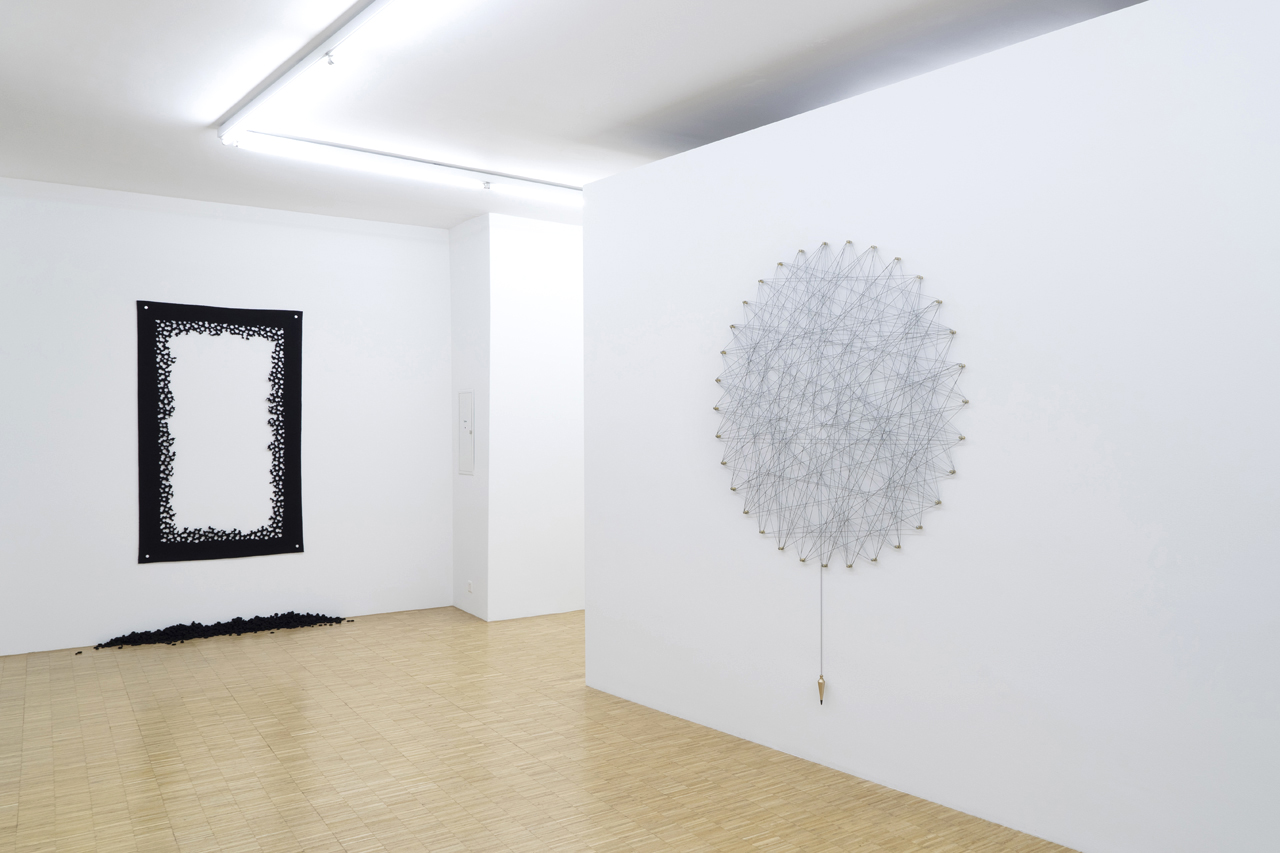
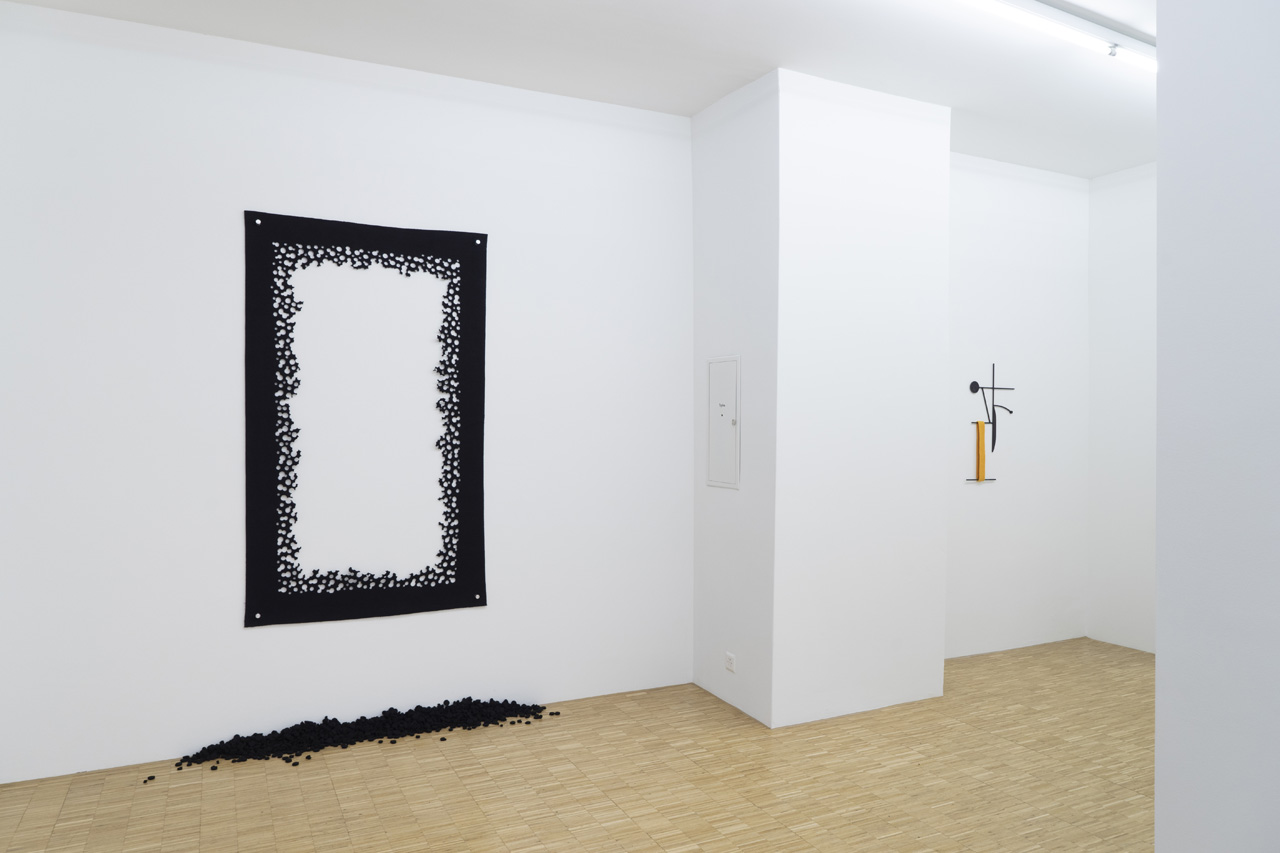
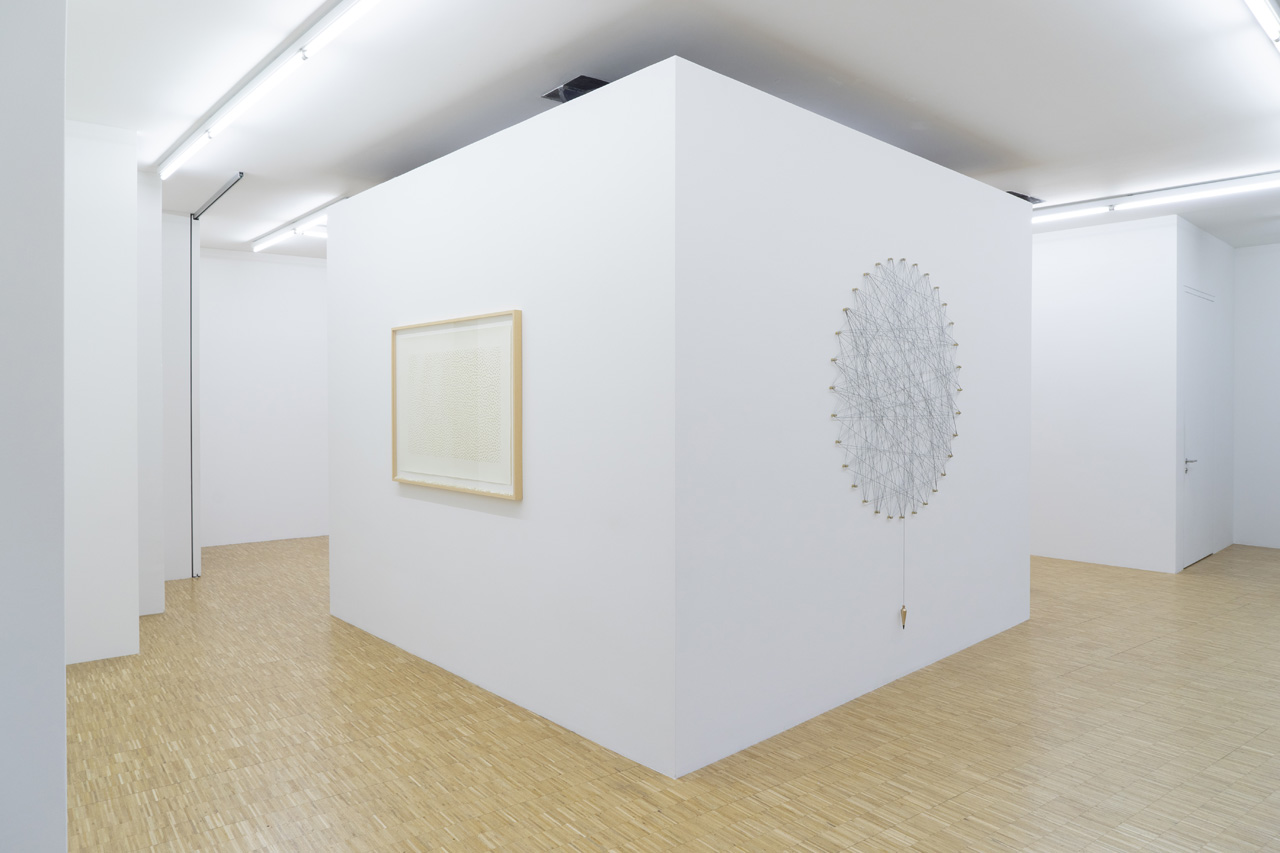
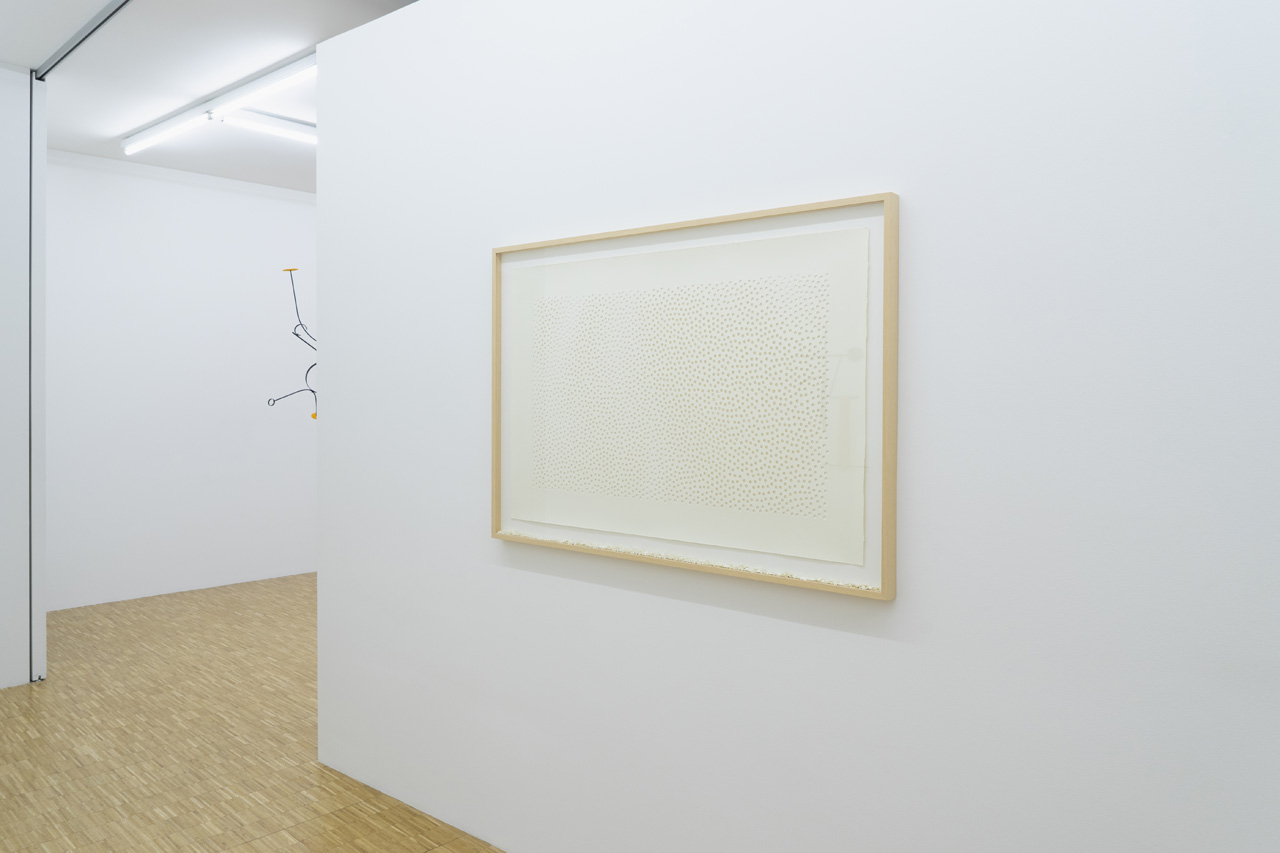
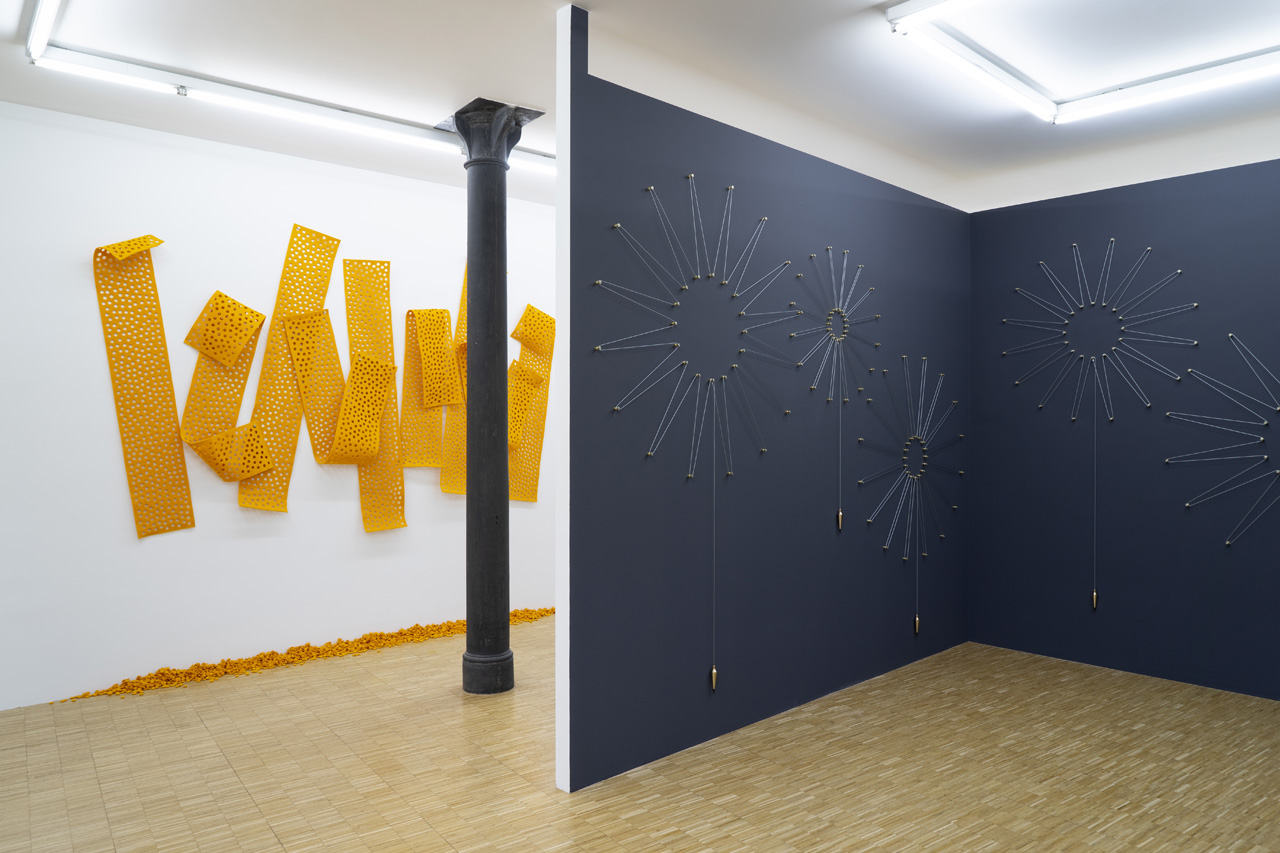
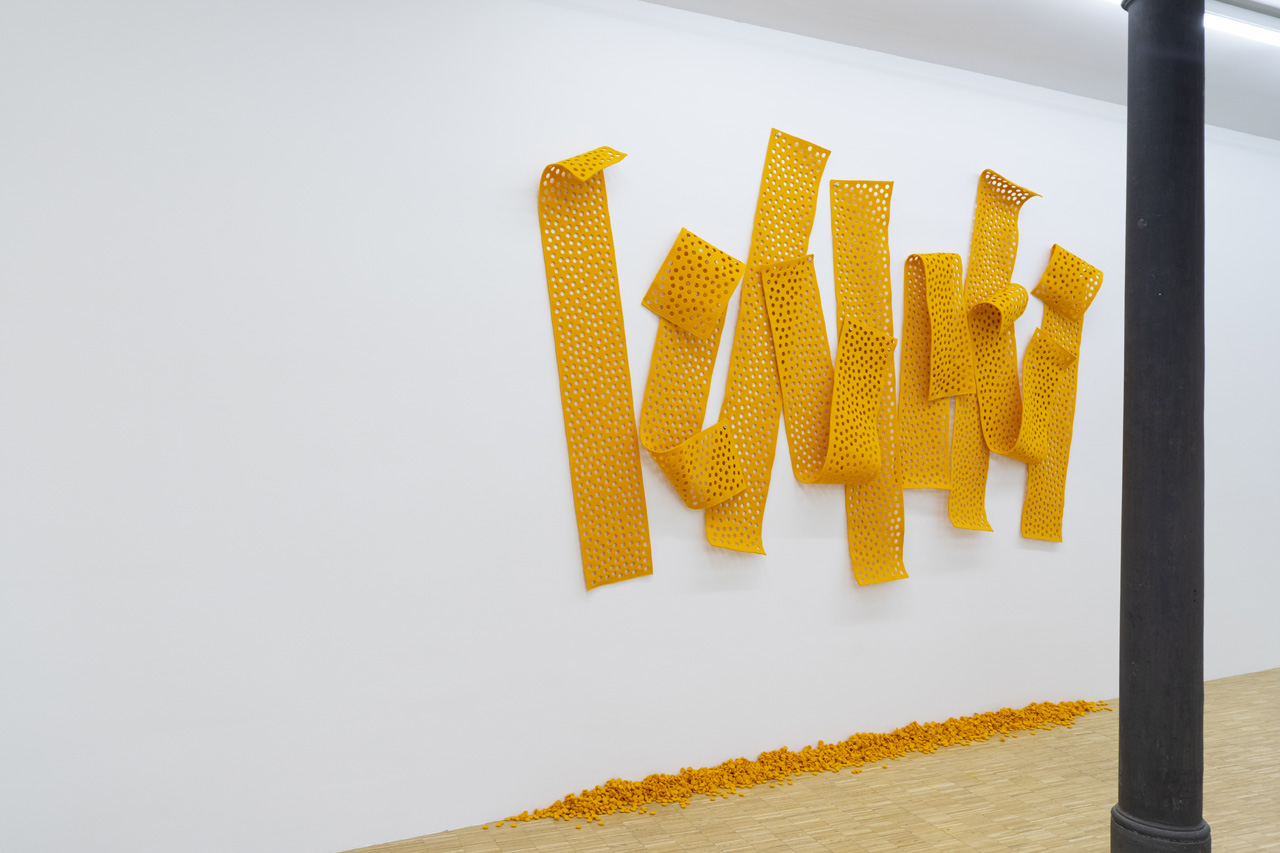
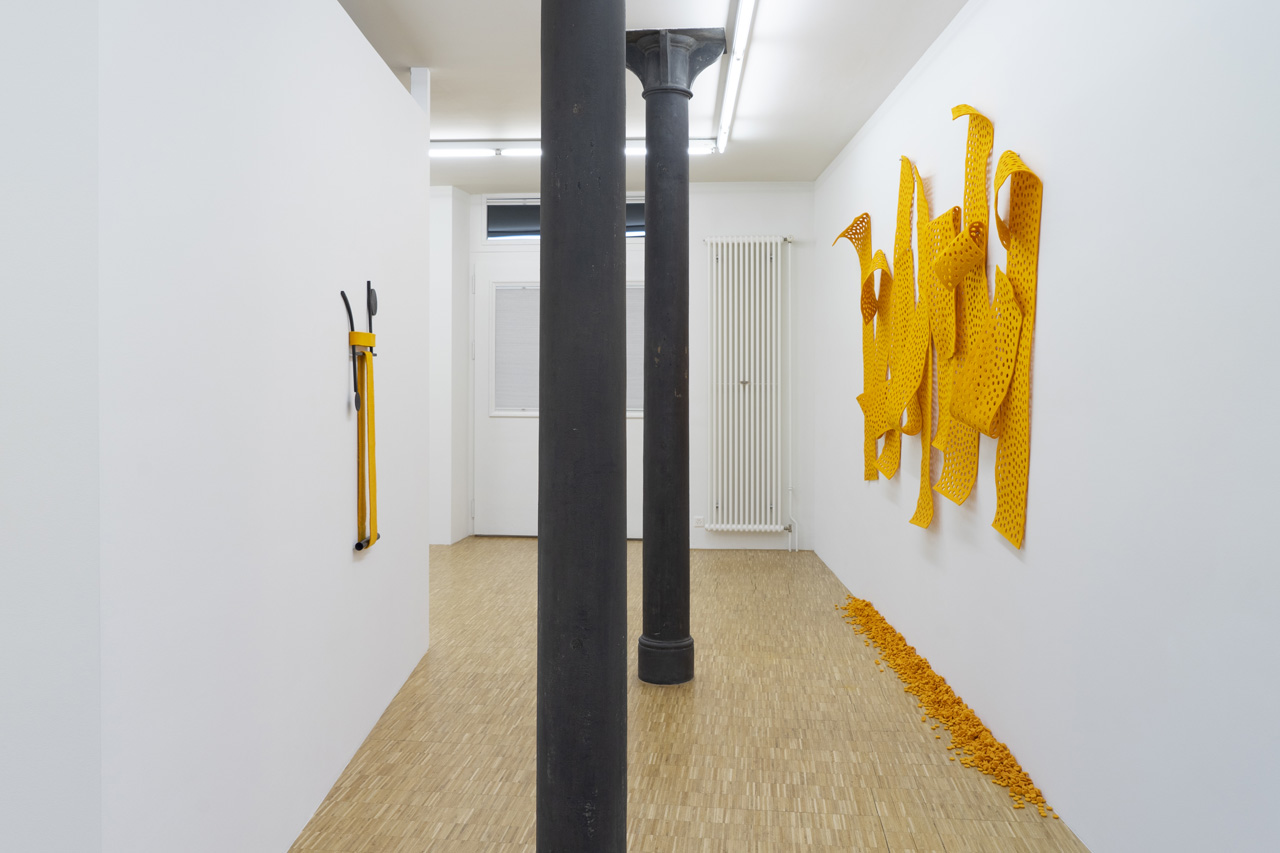
The notion of "contained emptiness" fittingly applies to some of Rendón's projects, such as Patrón de obra (2018), Área de corte (negro) (2019) and Papel de trabajo I (2018) which emphasize a process that can be described as a physically impossible dematerialization of the matter through the artistic gesture and the passing of time. Like a sculptor carving into the marble to liberate the envisioned form from the stone still imprisoning it, Rendón cut into cotton paper or felt to free not only the shape but especially the void constituting these materials, keeping the debris of such a process as an integral part of the artwork, a subtle yet powerful reminder of the phenomenon described by the Law of conservation of matter: the mass of any object can never be created nor destroyed but only transformed and rearranged.
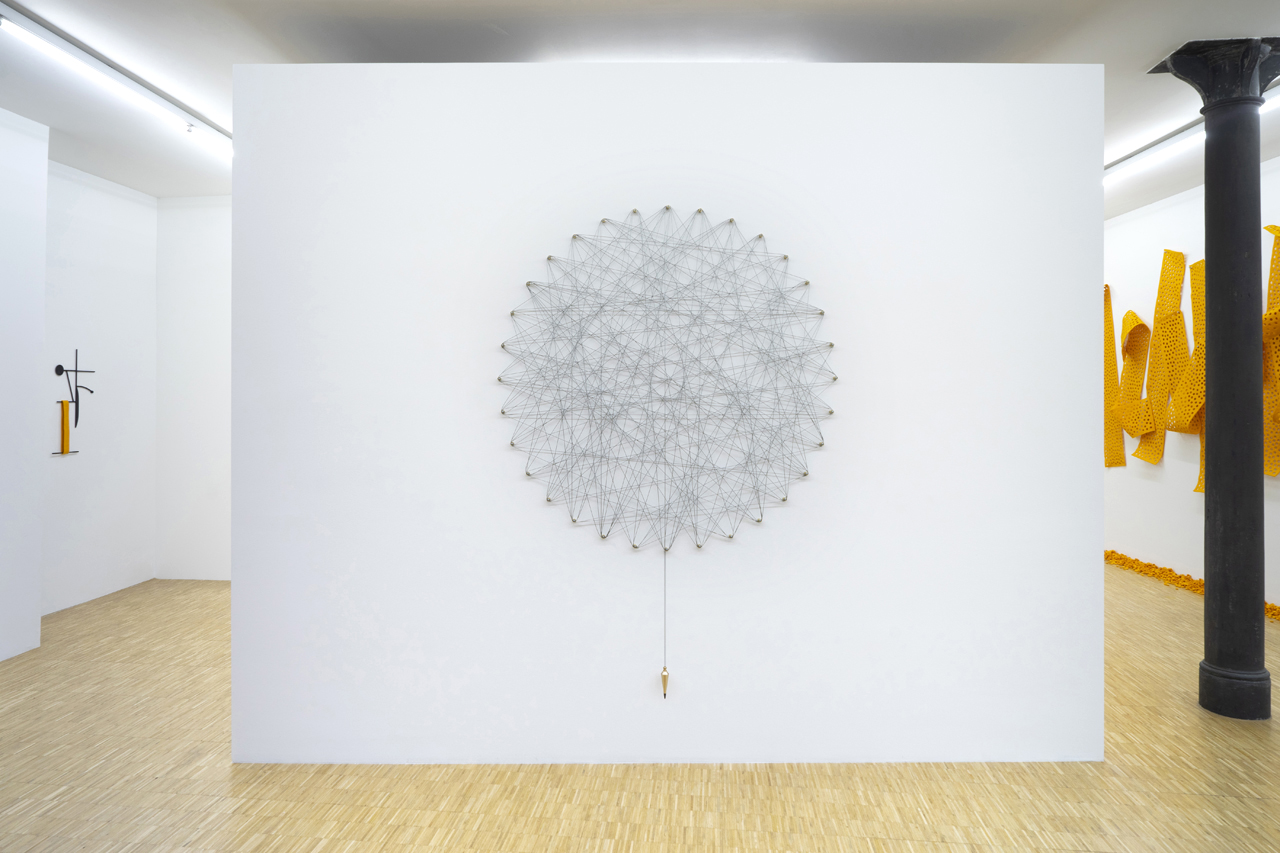
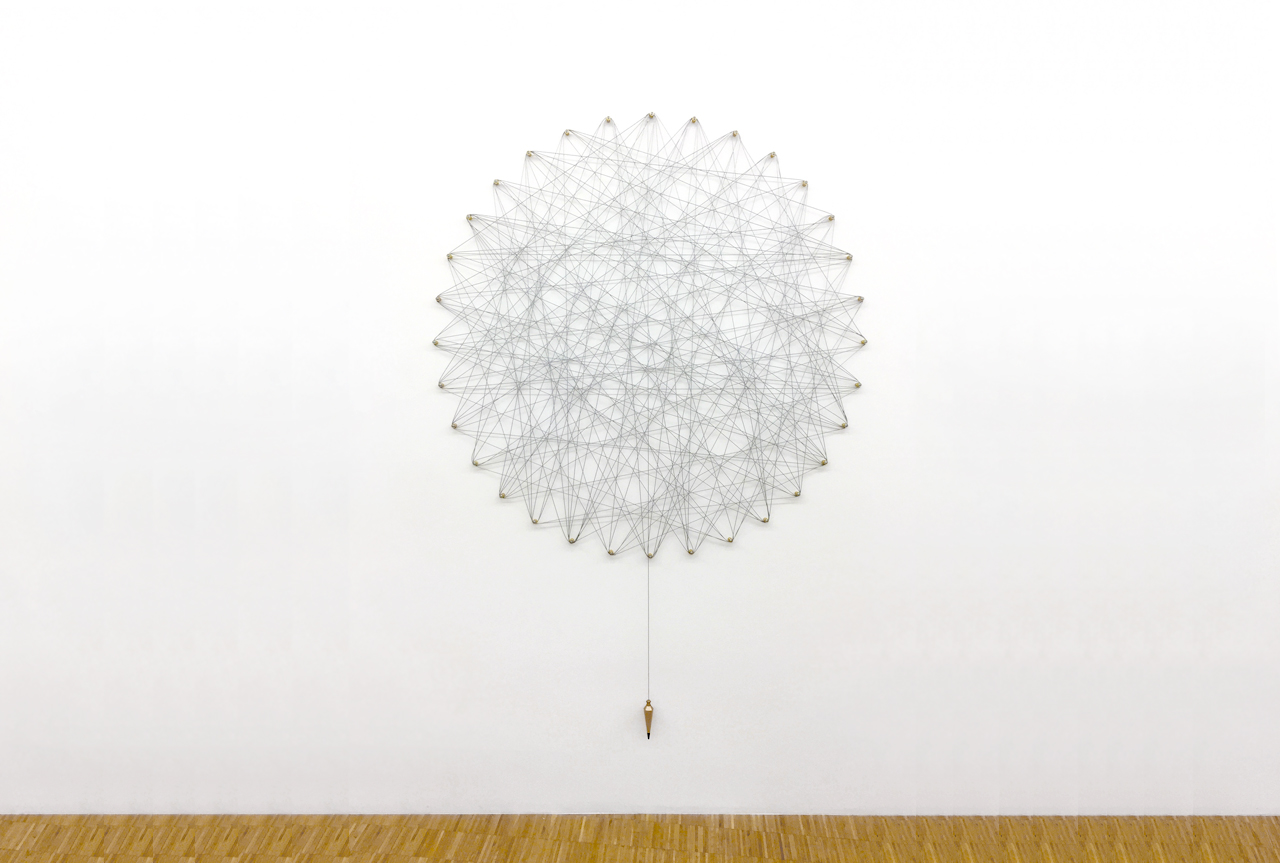
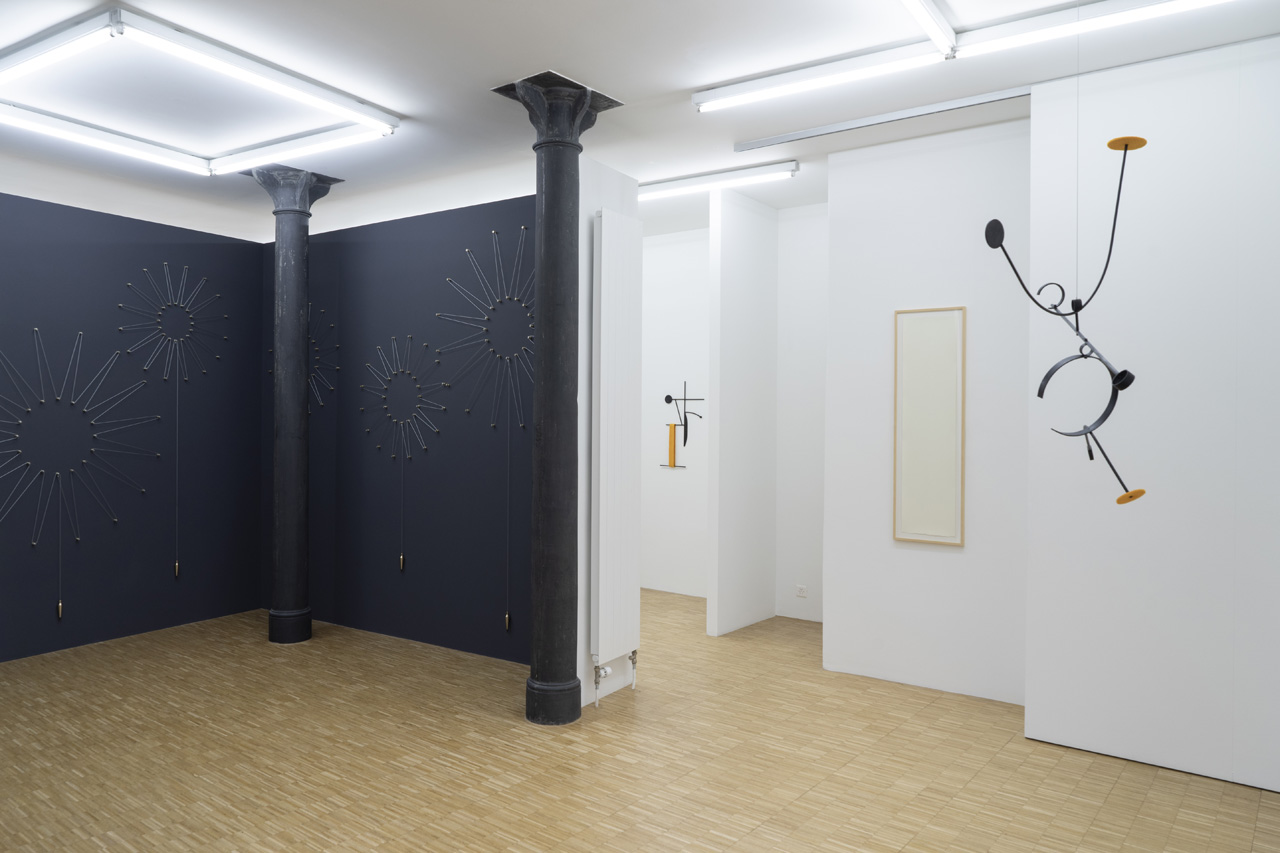
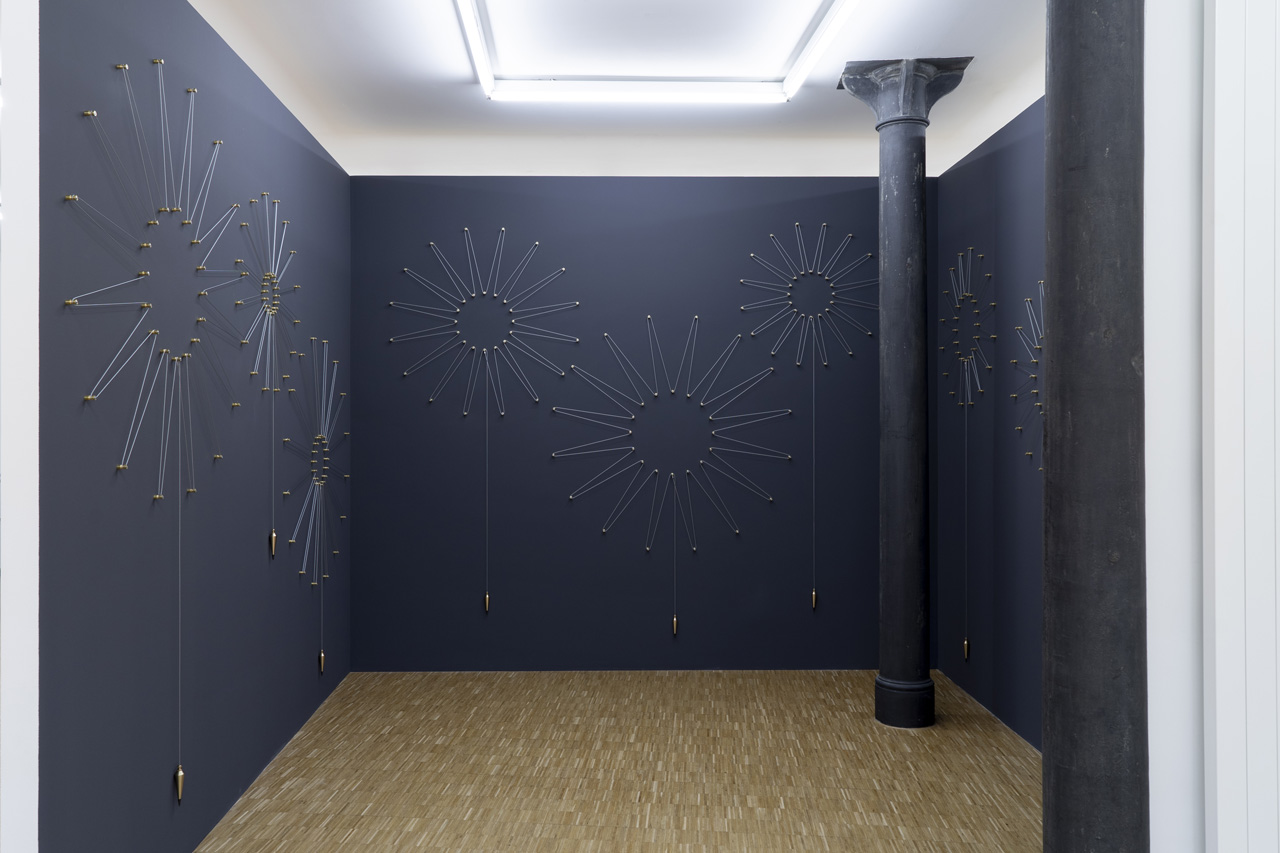
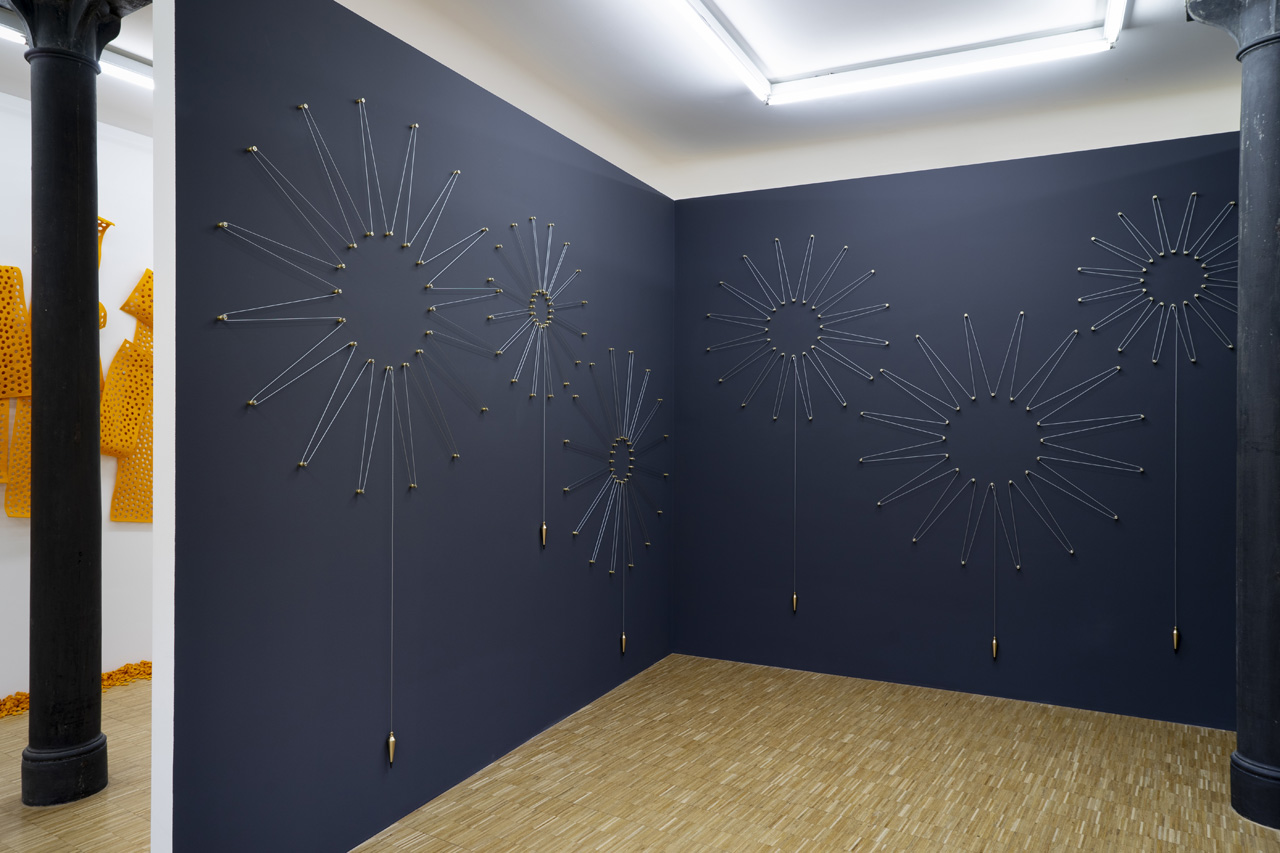
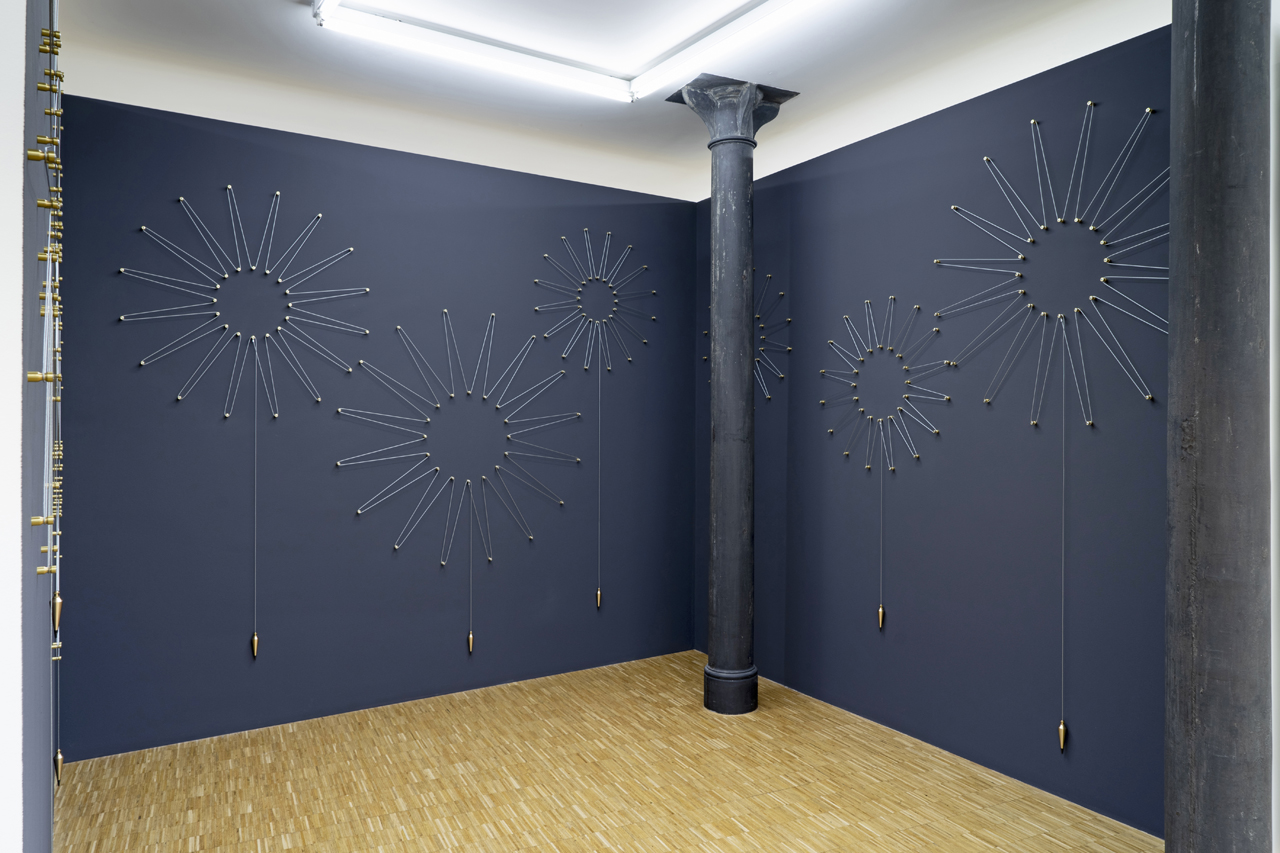
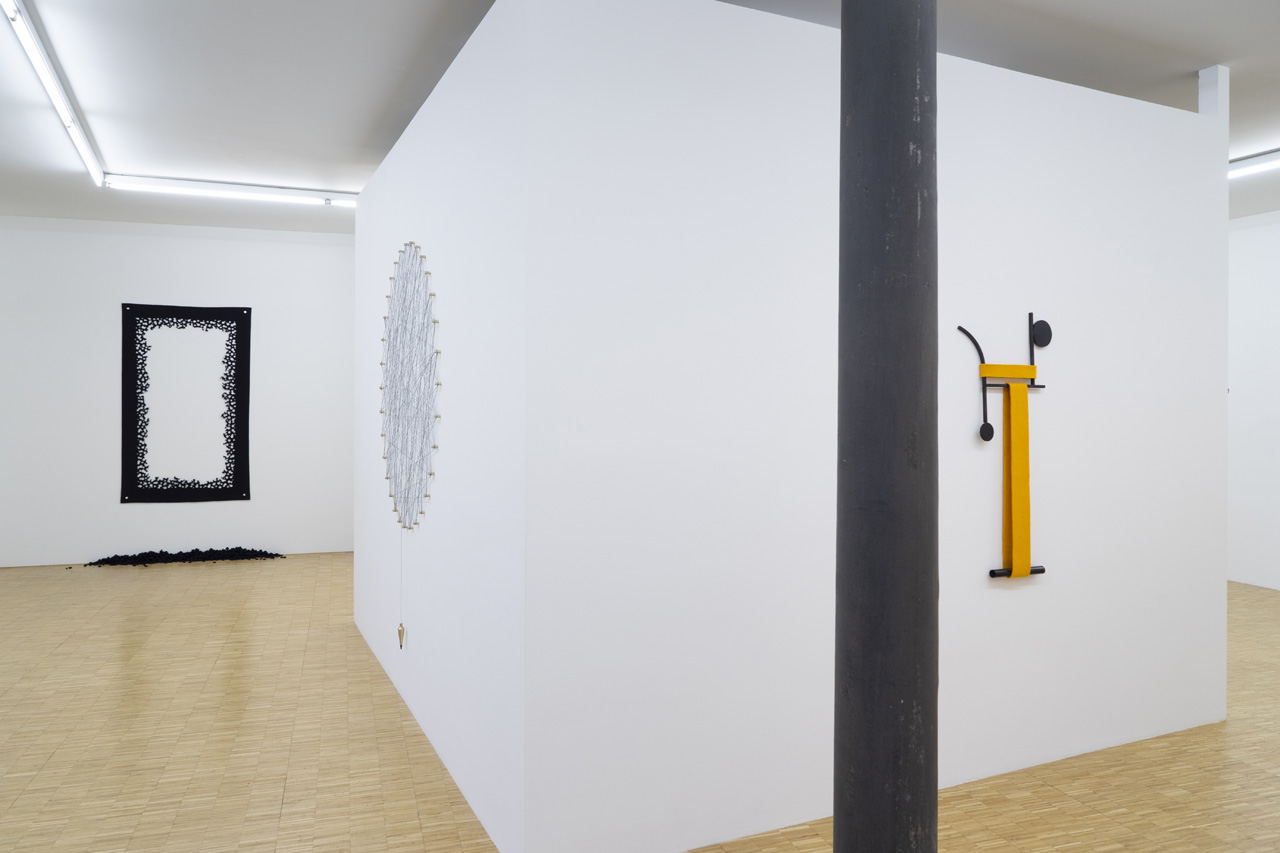
The second approach outlined above – i.e. Rendón's almost minimalistic practice – builds the fundament for Somos Constelaciones (2019), a site-specific installation that reflects on the fact that each and every physical body in our universe is affected by gravitation. Employing traditional construction tools such a brass plumb and pulleys inserted into the wall, Rendón capitalizes on the fundamental force discovered by Isaac Newton to keep the steel cable balanced and in tension in order to subdivide an empty black surface symbolizing a cosmic void and to achieve the creation of spatial and geometric objects resembling celestial bodies in a constellation. This work encapsulates Rendón's ambition, as he explains, to "establish a relation with the 'all,' with the stars and the constellations."
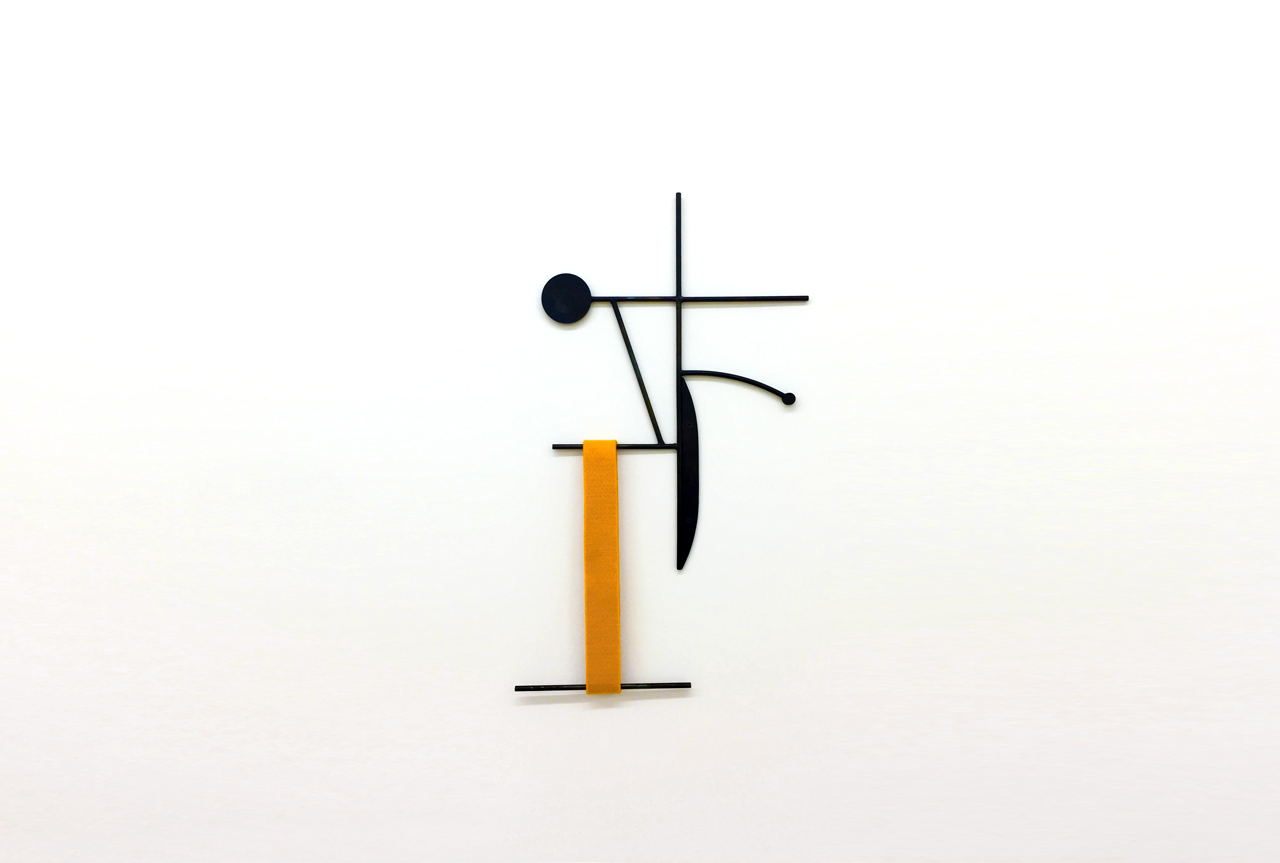
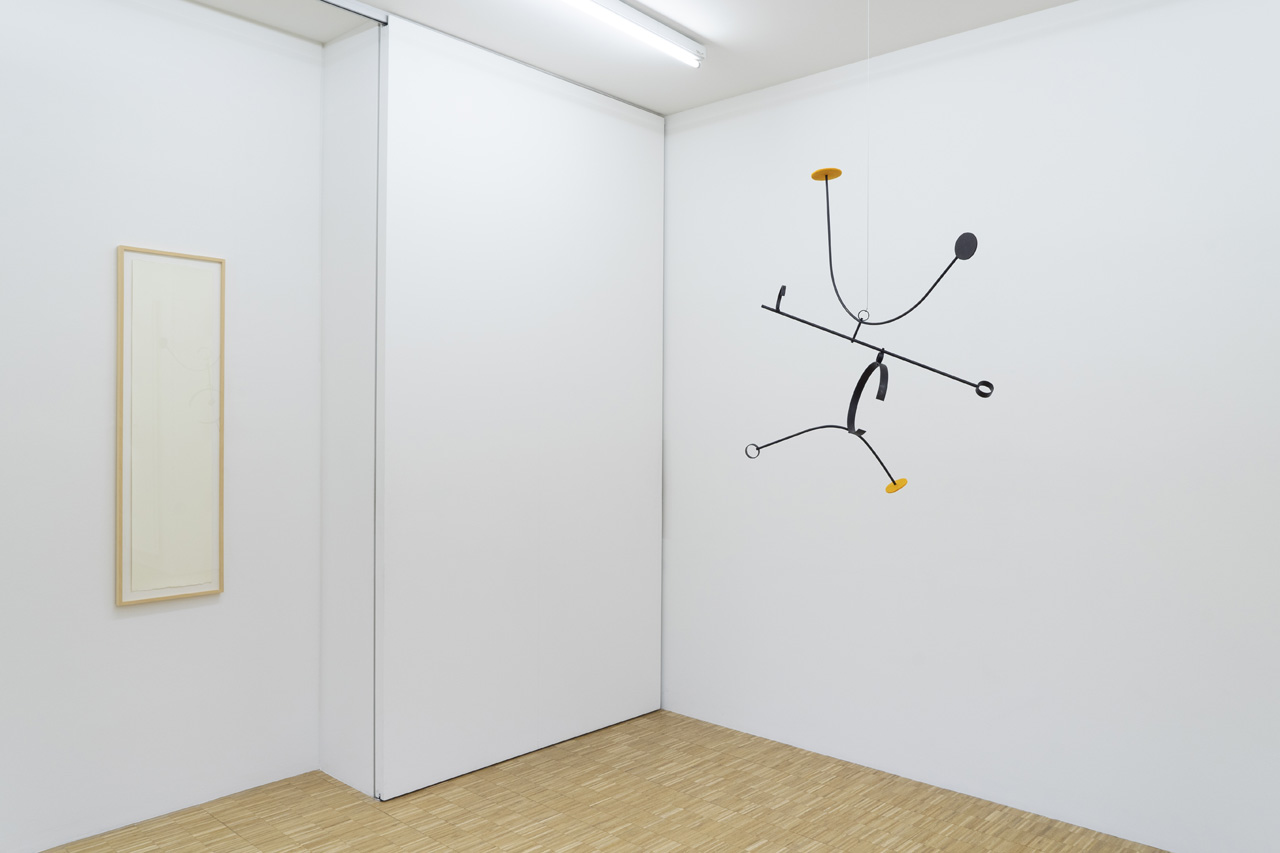
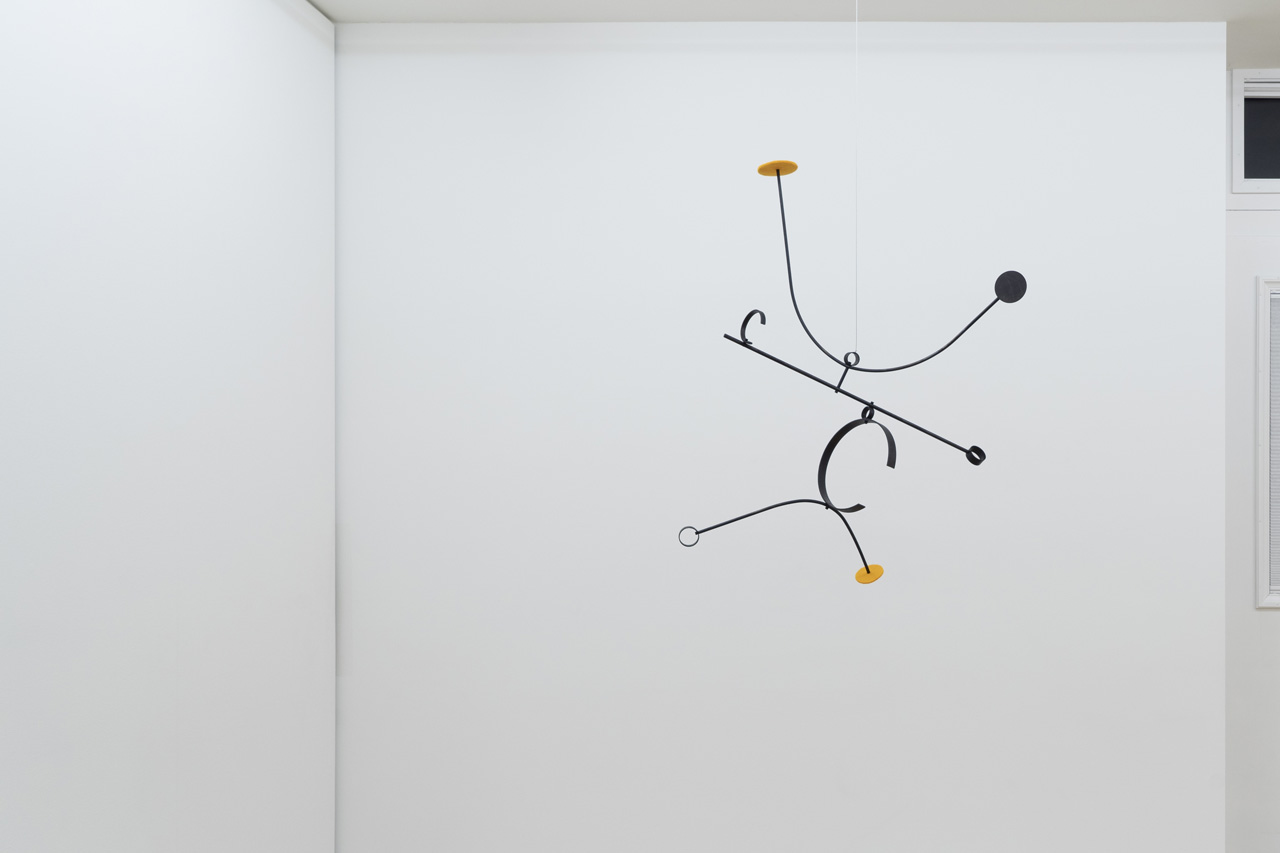
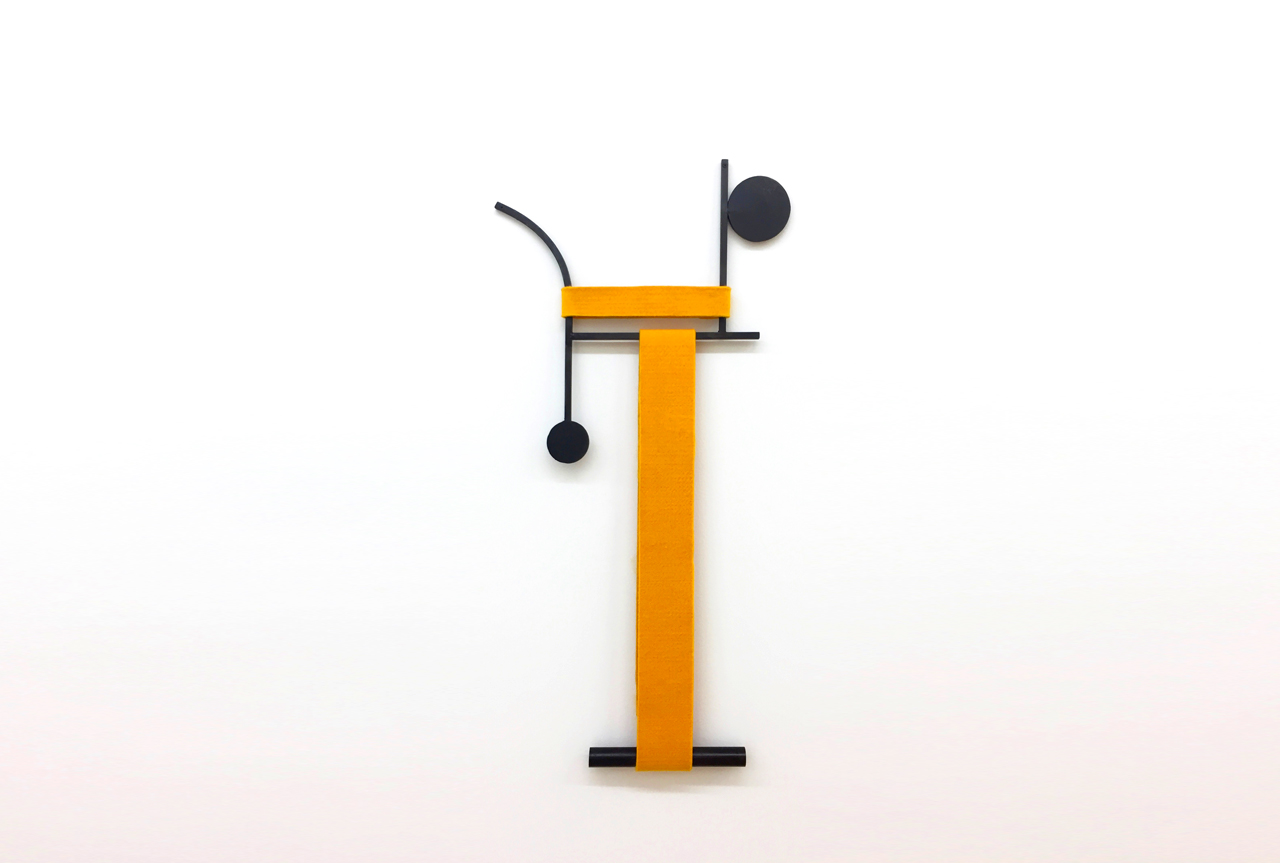
A similar consideration is also at work in the series Zona de concentración (2018) and Sistemas de atracción (2019), which are generated and constantly modified by the interaction of the radically different materials they are made of—the masculine hard and cold iron, and the soft and more feminine colored felt—their specific weights, textures and how they differently respond to the force of gravity.
Rendón's work is an ongoing experiment on matter whose aim is to investigate the world, its scientific and mathematic foundations and how they have a practical influence on our life, perception and ways of seeing. In this sense, his motivation and purpose are not too dissimilar from those shared by many artists once affiliated with the Constructivist movement, the Bauhaus and Concrete art, such as El Lissitzky, László Moholy-Nagy, Josef Albers and Max Bill, all figures Rendón greatly admires and drives inspiration from. Like them, combining art, crafts and technology as well as mathematical observations and an overall interest for experimentation, Rendón exalts the qualities of the materials he works with and seeks beauty in reduction.
Text: Valentina Locatelli, Independent Curator, Bern
Empleando materiales de construcción tradicionales e industriales, como madera, acero, fieltro de lana y pintura esmalte, Ricardo Rendón (n. México, 1970) investiga metódicamente cómo interactúan entre sí y con su entorno. Sobre todo, indaga en cómo estos materiales pueden ser transformados mediante una intervención artística calculada. Gracias a este enfoque, a lo largo de los años Rendón ha creado un cuerpo de obra que se distingue tanto por su calidad intrínseca —resultado del conocimiento material del artista y su habilidad artesanal— como por su carácter intelectual y conceptual.
Para todas sus obras más recientes presentadas en la exposición Estados de Relación en la Galerie Wenger de Zúrich, una vez más Rendón ha confirmado la elección de fundamentar su modus operandi artístico en una práctica háptica y manual. Lo ha hecho bien dispersando y reconfigurando literalmente la materia, o bien reduciendo el uso de materia al mínimo. Con este doble enfoque, el artista subraya la unidad y correspondencia de toda materia —en la Tierra y en el universo—, su comportamiento compartido y su transformación eterna.
La noción de "vacío contenido" se aplica acertadamente a algunos proyectos de Rendón, como Patrón de obra (2018), Área de corte (negro) (2019) y Papel de trabajo I (2018), que enfatizan un proceso que puede describirse como una desmaterialización físicamente imposible de la materia a través del gesto artístico y el paso del tiempo. Como un escultor que talla el mármol para liberar la forma concebida de la piedra que aún la aprisiona, Rendón corta papel de algodón o fieltro para liberar no solo la forma sino especialmente el vacío que constituye estos materiales, manteniendo los residuos de tal proceso como parte integral de la obra, un recordatorio sutil pero poderoso del fenómeno descrito por la Ley de conservación de la materia: la masa de cualquier objeto nunca puede ser creada ni destruida, solo transformada y reordenada.
El segundo enfoque descrito anteriormente —es decir, la práctica casi minimalista de Rendón— construye el fundamento de Somos Constelaciones (2019), una instalación site-specific que reflexiona sobre el hecho de que cada cuerpo físico en nuestro universo es afectado por la gravitación. Empleando herramientas de construcción tradicionales como plomada de latón y poleas insertadas en la pared, Rendón capitaliza la fuerza fundamental descubierta por Isaac Newton para mantener el cable de acero equilibrado y en tensión, a fin de subdividir una superficie negra vacía que simboliza un vacío cósmico y lograr la creación de objetos espaciales y geométricos que se asemejan a cuerpos celestes en una constelación. Esta obra encapsula la ambición de Rendón, como él explica, de "establecer una relación con el 'todo,' con las estrellas y las constelaciones."
Una consideración similar también está presente en la serie Zona de concentración (2018) y Sistemas de atracción (2019), que son generados y constantemente modificados por la interacción de los materiales radicalmente diferentes de los que están hechos —el hierro masculino, duro y frío, y el fieltro coloreado, suave y más femenino—, sus pesos específicos, texturas y cómo responden de manera diferente a la fuerza de la gravedad.
La obra de Rendón es un experimento continuo sobre la materia cuyo objetivo es investigar el mundo, sus fundamentos científicos y matemáticos y cómo tienen una influencia práctica en nuestra vida, percepción y formas de ver. En este sentido, su motivación y propósito no son muy diferentes de los compartidos por muchos artistas alguna vez afiliados al movimiento Constructivista, la Bauhaus y el arte Concreto, como El Lissitzky, László Moholy-Nagy, Josef Albers y Max Bill, todas figuras que Rendón admira enormemente y de las que se inspira. Como ellos, combinando arte, artesanía y tecnología, así como observaciones matemáticas y un interés general por la experimentación, Rendón exalta las cualidades de los materiales con los que trabaja y busca la belleza en la reducción.
Texto: Valentina Locatelli, Curadora Independiente, Berna