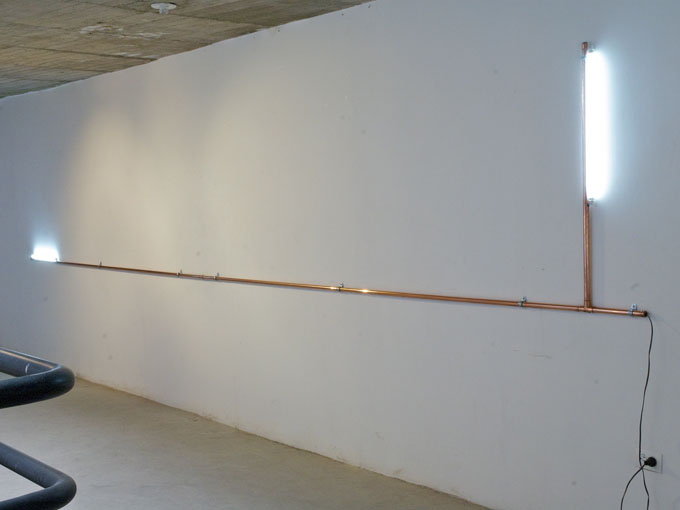
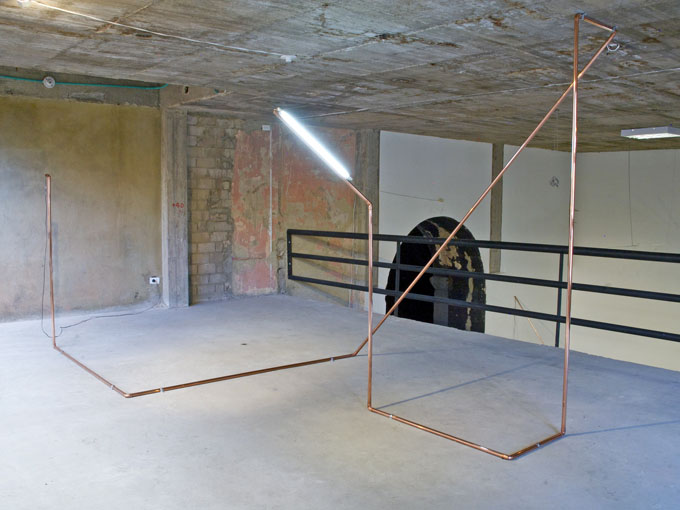
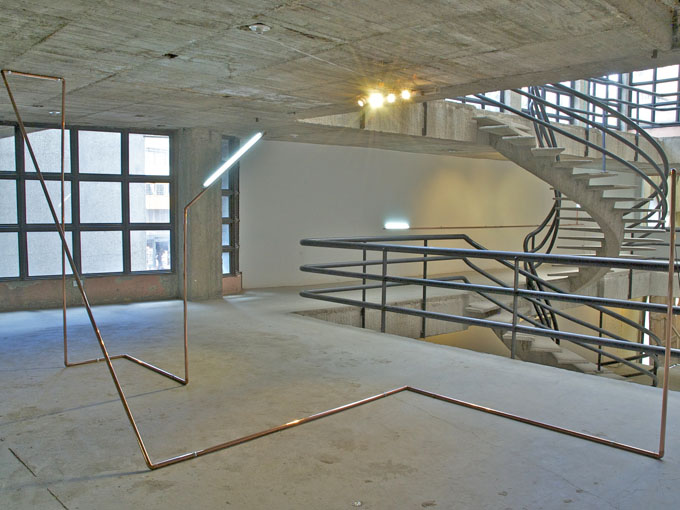
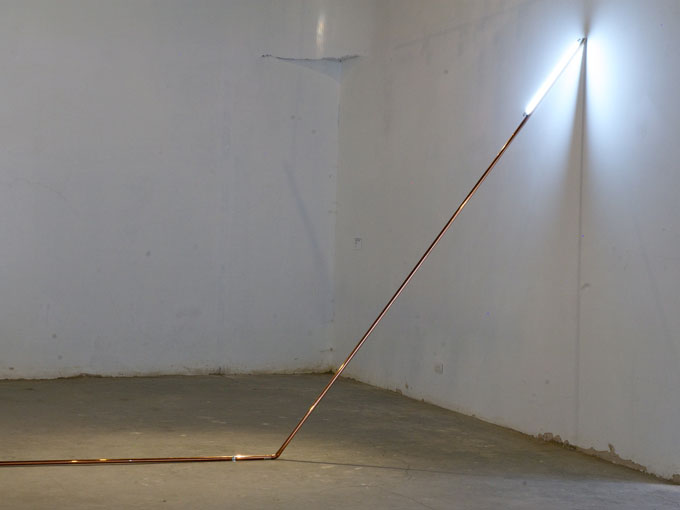
Through interaction with a building that bears the scars of a past characterized by oblivion, Mexican artist Ricardo Rendón works around architecture to reflect on the artist's craft and creative practice. Rendón's work at Odeón is born from a nostalgic fascination with spaces that oscillate between creation and destruction, with those structures that speak of memory; it is these spaces that allow him to contemplate and suggest a possible architecture. After an experiment that begins with uncertainty — since Rendón's work unfolds as it interacts with and responds to its environment — the artist seeks to re-create and expand the limits of the space in which he finds himself through the manipulation of implements that are part of architectural practice.
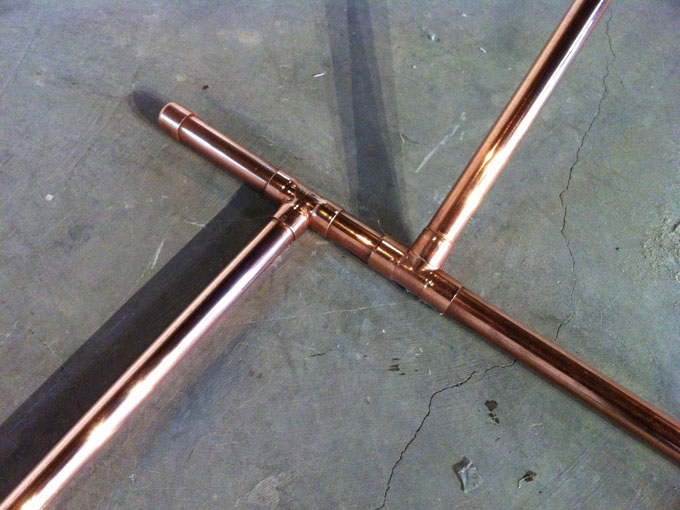
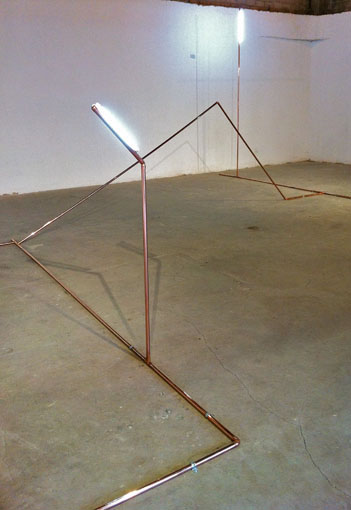
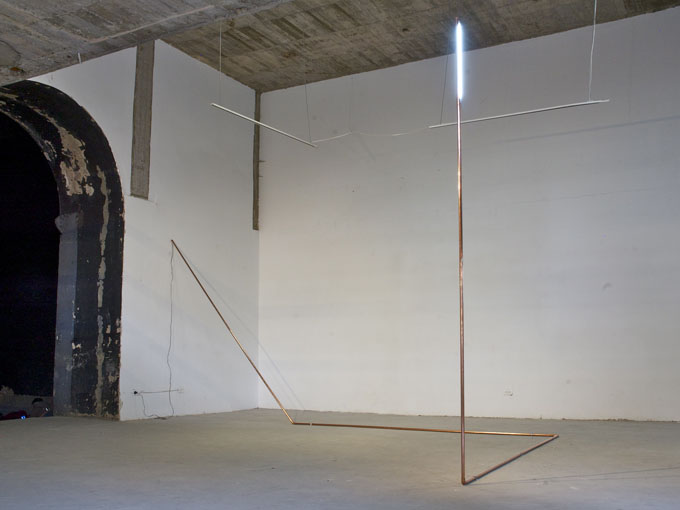
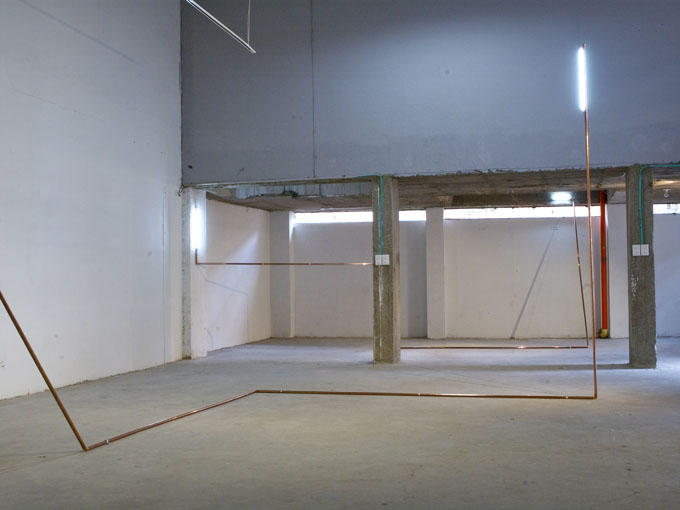
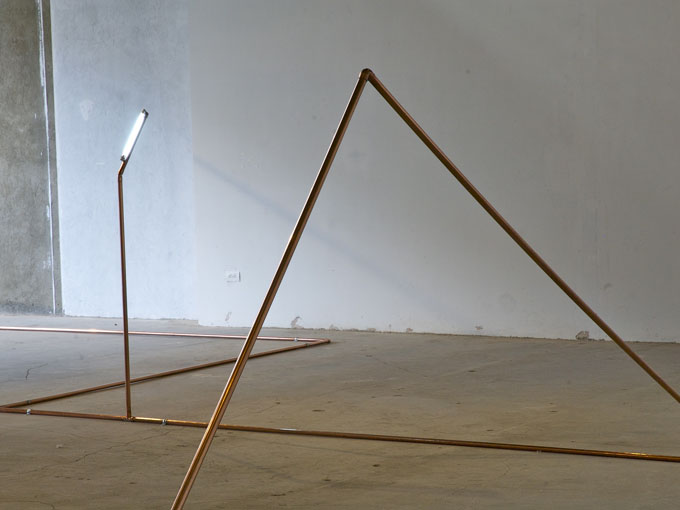
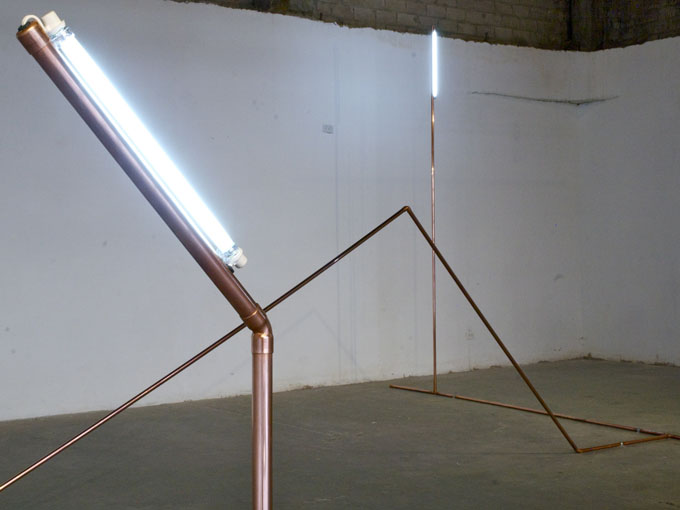
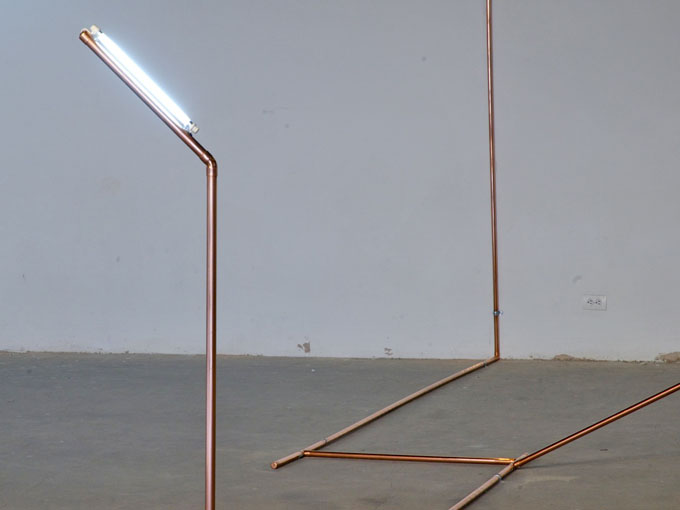
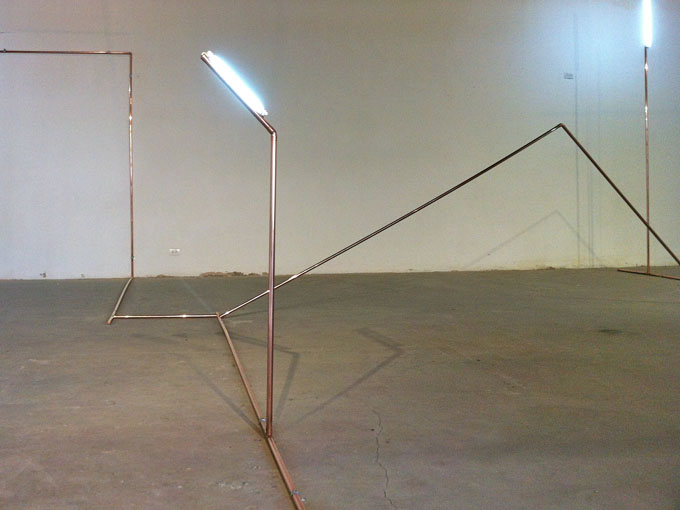
For example, his installation in the building seeks to establish a conversation with the past, with places and materials that used to exist here — such as old rooms or different copper pipe assemblies. By entering into conversation with sculptures that act as metaphors for finished buildings, we are enabled to understand — from within — what it means to inhabit a space; the possibility opens up to study the poetic relationship that exists between container and content in a world where the architectural craft meets artistic practice.
When a work is conceived, creating it implies a certain level of craft, of physical activity. In Rendón's case, his installation experiments require knowledge of industrial and manual labor, work that tends to be repetitive and sequential; they require the artist to involve his corporeality in order to shape matter. For example, he works with masonry, plumbing, carpentry, etc., these being processes of creation and knowledge that are not usually considered within the framework of artistic production. Nevertheless, contemporary art increasingly separates itself from its historical baggage of having to fulfill a utilitarian purpose. Instead — and in this case, for Rendón — there is an element of satisfaction and affirmation of being when one becomes part of the execution, of the construction of the work. Here is where the artist invites us to ask ourselves, why create?
[To create] is perhaps to revisit the ancient discussion between art and life, but decidedly the answer to this questioning must be found, from my perspective, in the practice itself. One must ask what path to follow: to create in order to build oneself or to find oneself; to leave the past behind in order to find oneself in the flow of the continuous present; to take the creative experience as a means of vindication of being, or of being as context and matter of production... Being as reference and as context, but beyond that, being as raw material, as possibility of transformation and creation through artistic practice. ("Operation Manual" by Ricardo Rendón, 2011)
Hacia una arquitectura posible is the result of a reflection on the artist's doing, on what it means to execute a work of art; it is the unleashing of creativity through a conversation with space, thus giving infinite possibilities to the architectural event.
Text: Vanessa Adatto
Por medio de la interacción con un edificio que evidencia las cicatrices de un pasado caracterizado por el olvido, el artista mexicano Ricardo Rendón trabaja en torno a la arquitectura para así reflexionar sobre el oficio del artista y su práctica creativa. El trabajo de Rendón en Odeón nace tras una fascinación nostálgica por los espacios que oscilan entre la creación y la destrucción, por aquellas estructuras que hablan de la memoria; son éstos los espacios que le permiten contemplar y sugerir una arquitectura posible. Tras un experimento que parte de la incertidumbre –pues, la obra de Rendón se va desencadenando al interactuar con y responder a su entorno- el artista busca re-crear y ampliar los límites del espacio en el que se encuentra a través de la manipulación de implementos que hacen parte de la práctica arquitectónica.
Por ejemplo, su instalación en el edificio busca entablar una conversación con el pasado, con lugares y materiales que aquí solían existir –tales como antiguos cuartos o diferentes tuberías ensambladas en cobre. Al entrar en conversación con esculturas que actúan como metáforas de edificaciones terminadas, se nos posibilita comprender –desde adentro- aquello que es habitar un espacio; se abre la posibilidad de estudiar la relación poética que existe entre contenedor y contenido en un mundo en el que el oficio arquitectónico se encuentra con la práctica artística.
Cuando una obra se concibe, crearla implica cierto nivel de oficio, de actividad física. En el caso de Rendón, sus experimentos de instalación requieren del conocimiento de trabajos industriales y manuales, trabajos que tienden a ser repetitivos y secuenciales; requieren que el artista involucre su corporalidad para así moldear la materia. Por ejemplo, él trabaja con la albañilería, plomería, carpintería, etc., siendo éstos procesos de creación y conocimiento que no tienden a considerarse dentro del marco de la producción artística. No obstante, el arte contemporáneo cada vez más se separa de su bagaje histórico de tener que cumplir con un propósito utilitario. En cambio –y en este caso, para Rendón- hay un elemento de satisfacción y reafirmación del ser cuando se hace parte de la ejecución, de la construcción de la obra. He aquí dónde el artista nos invita a preguntarnos, ¿por qué crear?:
[Crear] quizá sea retomar la añeja discusión entre arte y vida, pero decididamente la respuesta a dicho cuestionamiento se debe de encontrar, desde mi perspectiva, en la práctica misma. Cabe preguntarse cuál será el camino a seguir: crear para construirse o encontrarse a si mismo; dejar atrás el pasado para encontrarse en el flujo del presente continuo; tomar la experiencia creativa como medio de reivindicación del ser, o al ser como contexto y materia de producción…El ser como referencia y como contexto, pero más allá el ser como materia prima, como posibilidad de transformación y creación mediante la práctica artística. ("Manual de Operación" de Ricardo Rendón, 2011)
"Hacia una arquitectura posible" es el resultado de una reflexión sobre el qué-hacer del artista, sobre lo que significa la ejecución de una obra de arte; es el desencadenar de la creatividad por medio de una conversación con el espacio, dándole así posibilidades infinitas al suceso arquitectónico.
Texto: Vanessa Adatto