Exhibition
Galería Arróniz Arte Contemporáneo — Mexico City, 2014
The void in the work of art does not refer to content nullity;
it is a space waiting to be filled from the viewer experience.
David Miranda, Exhibition Text — 2014
Nowadays, the different exhibition devices inside contemporary gallery spaces have overflowed and it seems that the relation between the works of art and the classic displays in those places is more distant. However, despite the discussion about the conventional art formats, like frames or pedestals, is apparently over, the reality shows that good part of the works presented by artists at galleries and other cultural spaces, are still adjusted by those classic formats for their thinking representation, deriving mostly in the endless necessity for possession and artifact analysis. The questions, consequence of developing the problem of installation as a new model for representation, helped to understand the alternative way to conceptualize space and to generate the differences between landscape, architecture and sculpture [1].
Most of the specialized critics from the 70s in North America were devoted to that, but the problem with the exhibition devices was not exactly resolved with their modification, it was diverted to the transformation of the space where the artistic event occurs. In most of these places, the pedestal and the frame still rule the exhibition ways. [1] Rosalind Krauss, Sculpture in the Expanded Field, 1979.
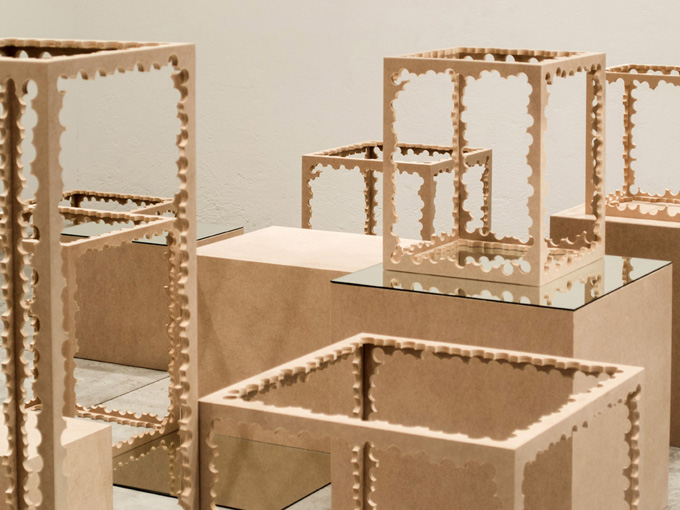
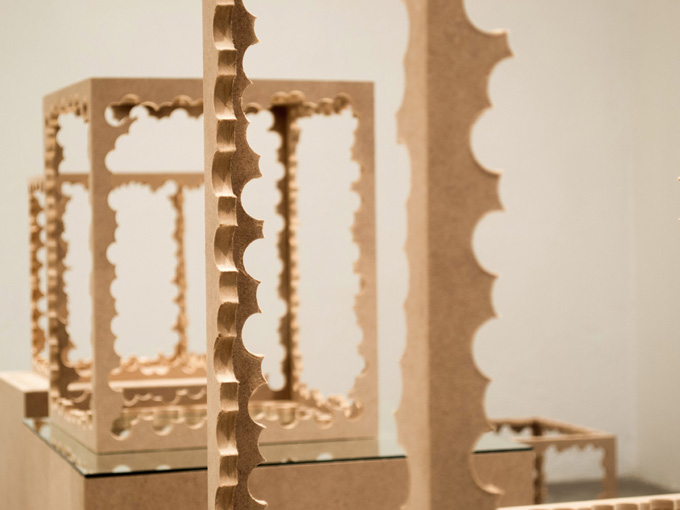
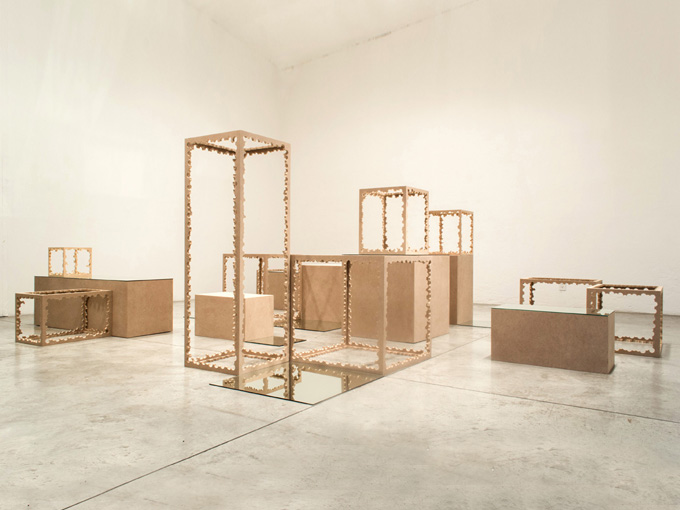
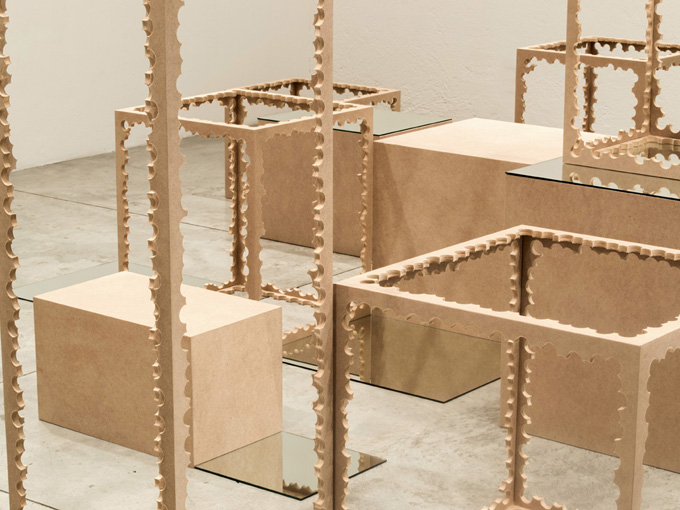
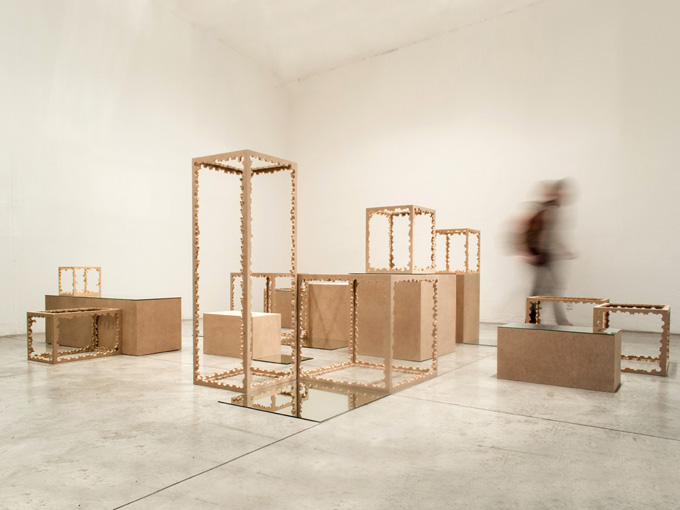
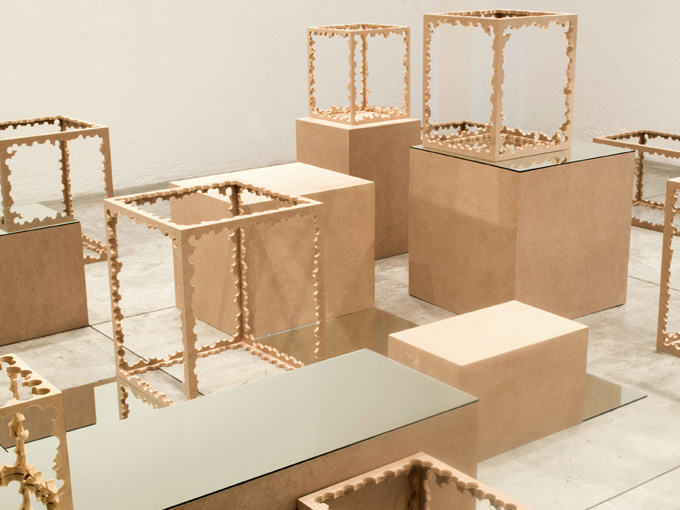
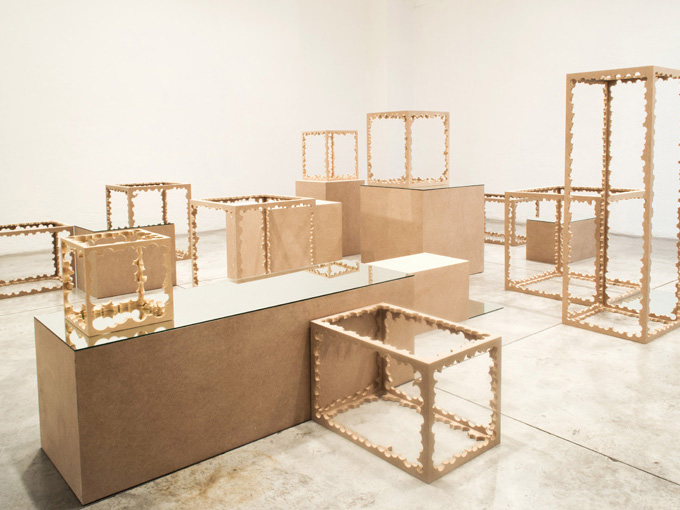
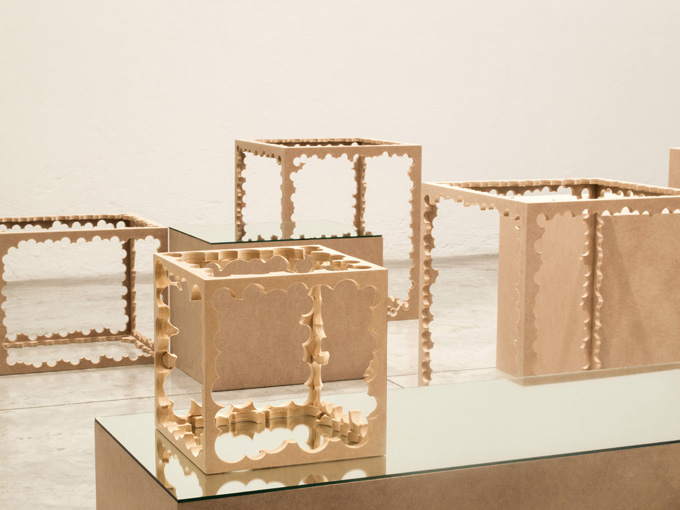
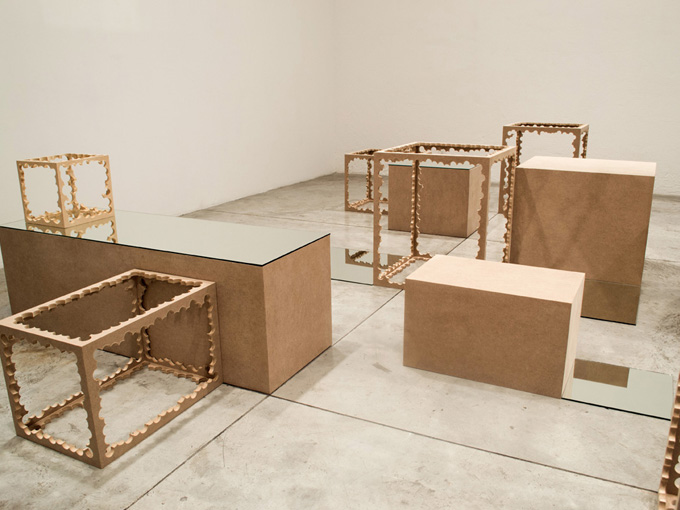
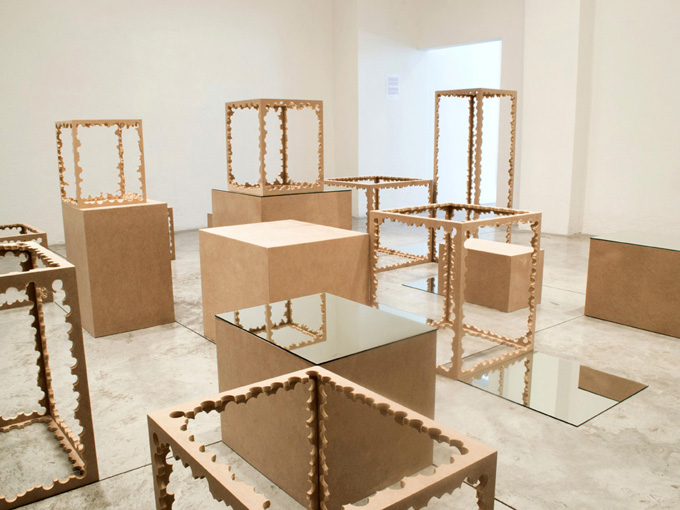
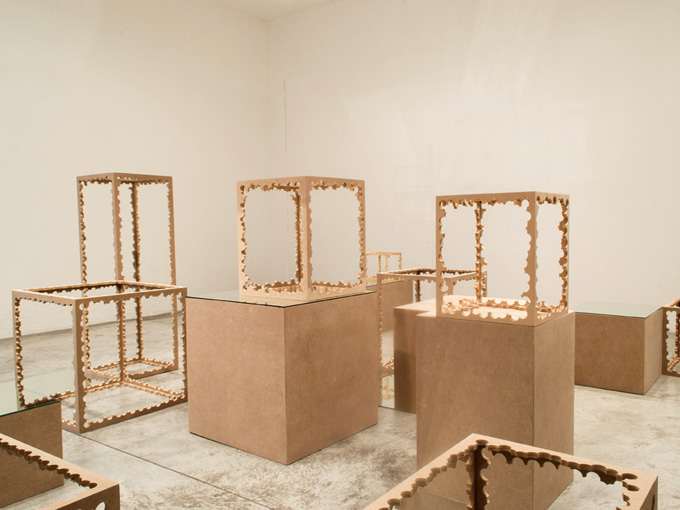
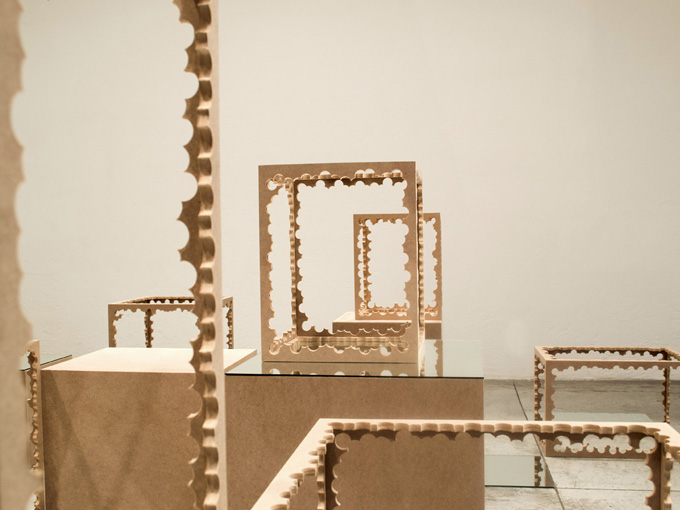
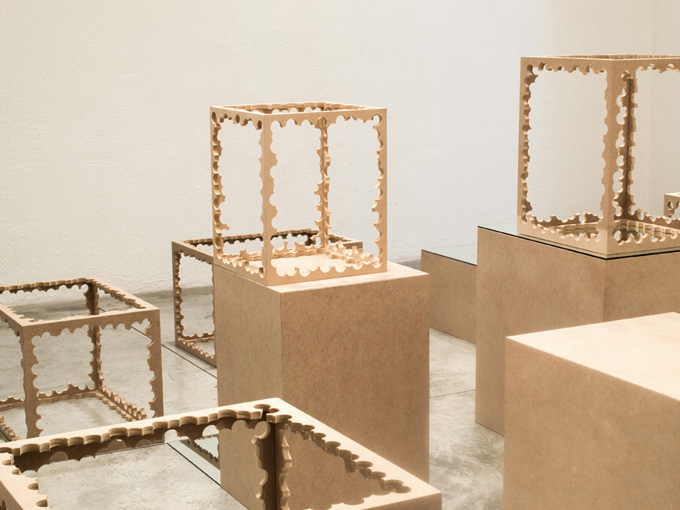
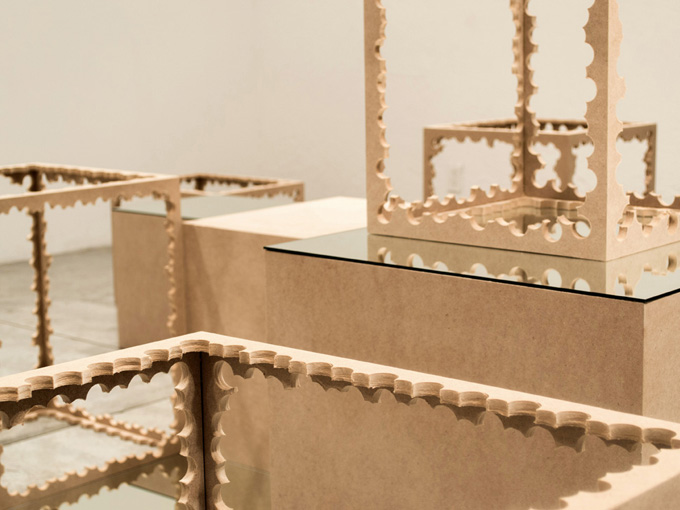
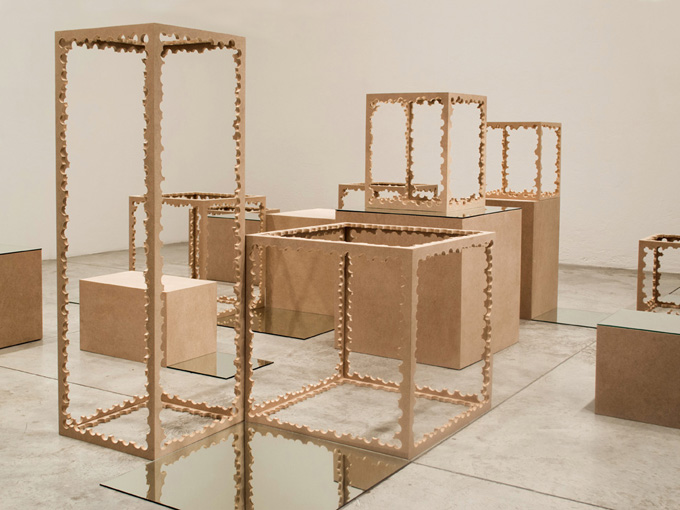
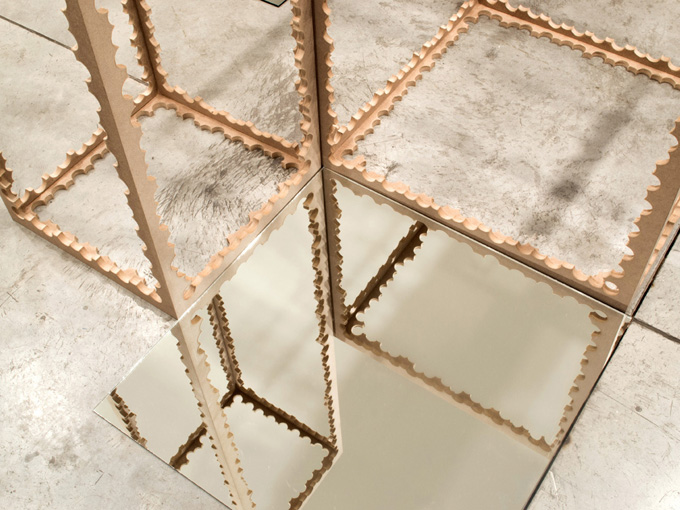
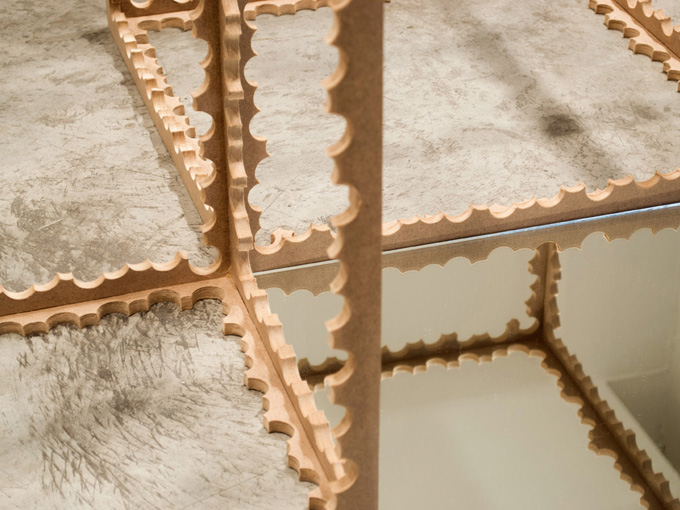
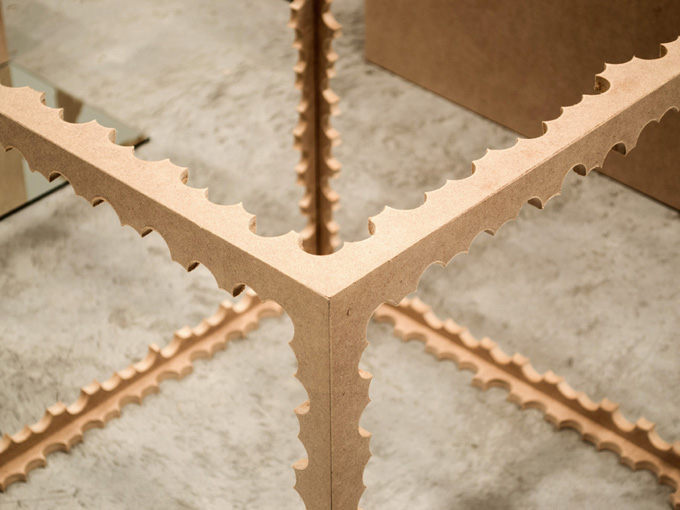
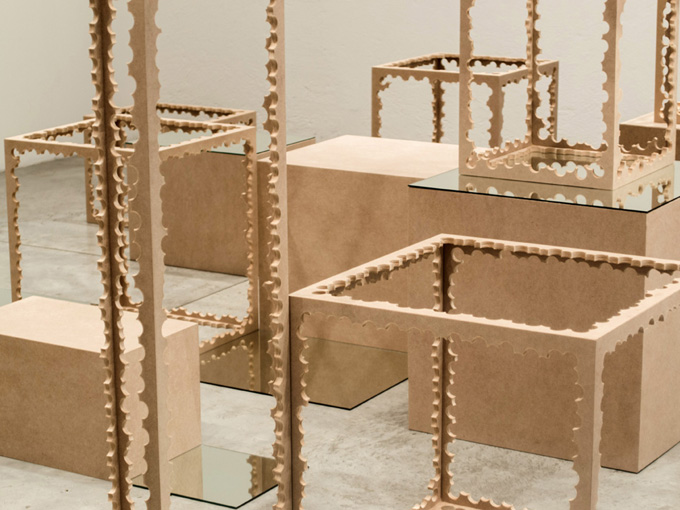
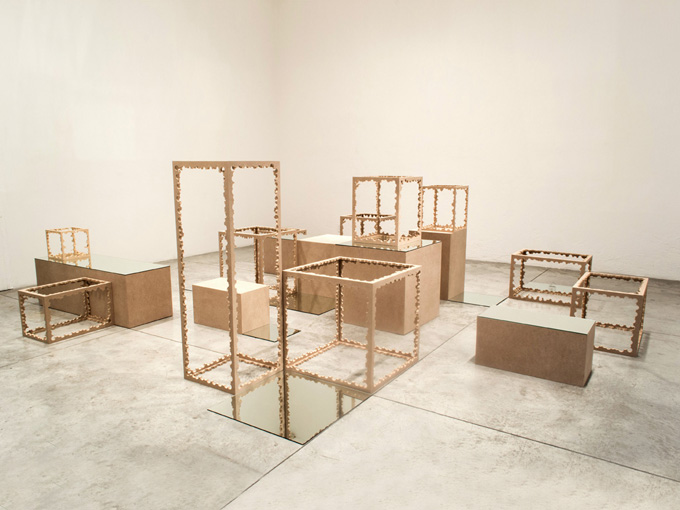
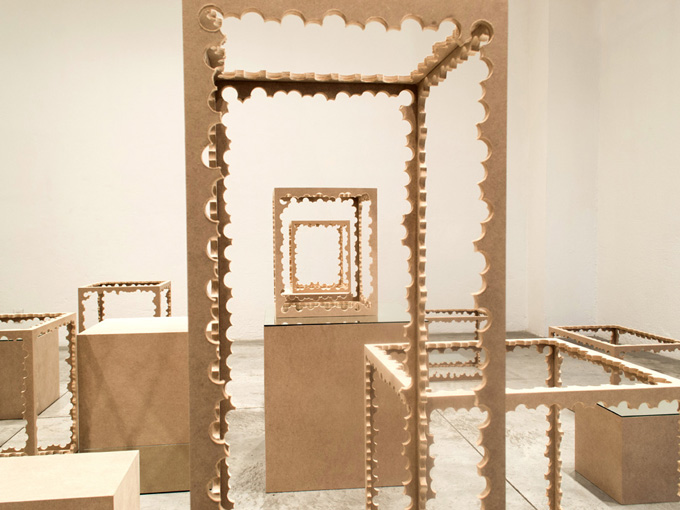
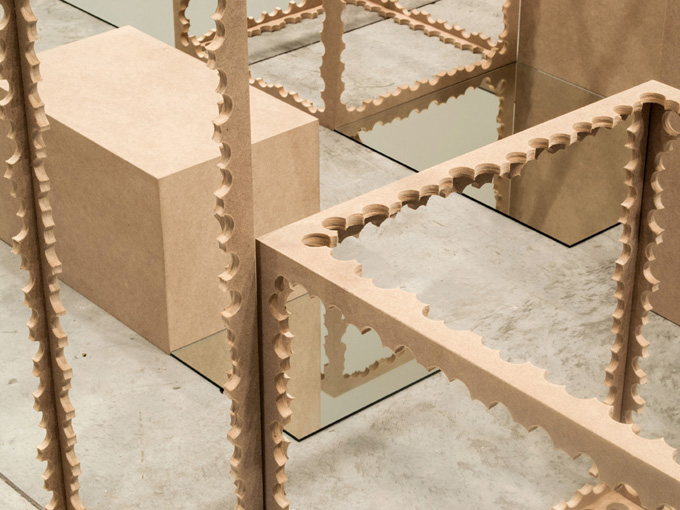
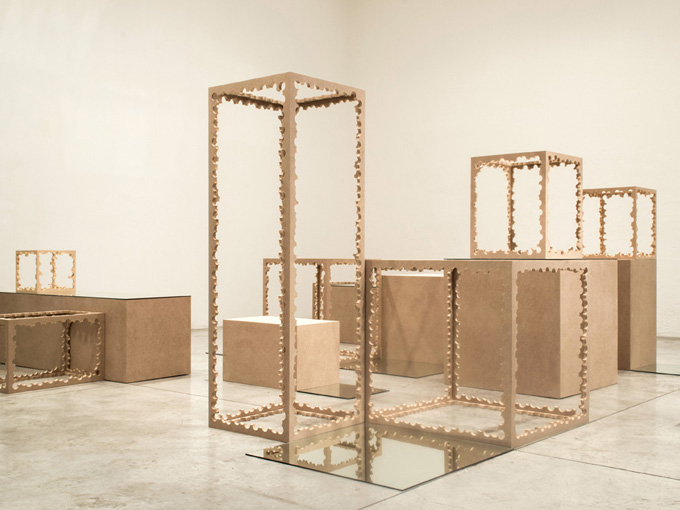
Ricardo Rendón proposes an exercise entitled Void is all at the Project Room of Arróniz, formally referring to the pedestal to activate inside the exhibition space several relations with the actual place and many references from the history of art, specially the history of modern and contemporary sculpture. Through many formal clues, like prisms, mirrors and the visual incisions produced for the viewer by Rendón's project, the installation behaves like an extension of the sculpture language, not only from its materiality, but from its significance and relevance as exhibition device and work of art at the same time, reminding us why the sculptural event is not only on the thing or the volume inside the white cube, it also happens in-between the unoccupied spaces produced in order to place the statement in the viewers route, activating their memories with the proposed relations. The void in the work of art do not refers to content nullity, it is a space waiting to be filled from the viewer experience.
Text: David Miranda
Actualmente, los diferentes dispositivos expositivos dentro de los espacios de galería contemporáneos han desbordado y parece que la relación entre las obras de arte y los soportes clásicos en esos lugares es más distante. Sin embargo, a pesar de que la discusión sobre los formatos de arte convencionales, como los marcos o los pedestales, aparentemente ha terminado, la realidad muestra que buena parte de las obras presentadas por los artistas en galerías y otros espacios culturales, todavía se ajustan a esos formatos clásicos para su representación conceptual, derivando principalmente en la interminable necesidad de posesión y análisis del artefacto. Las preguntas, consecuencia de desarrollar el problema de la instalación como un nuevo modelo de representación, ayudaron a comprender la manera alternativa de conceptualizar el espacio y a generar las diferencias entre paisaje, arquitectura y escultura [1].
La mayoría de los críticos especializados de los años 70 en Norteamérica se dedicaron a ello, pero el problema con los dispositivos expositivos no se resolvió exactamente con su modificación, se desvió hacia la transformación del espacio donde ocurre el evento artístico. En la mayoría de estos lugares, el pedestal y el marco todavía dominan las formas de exhibición. [1] Rosalind Krauss, Sculpture in the Expanded Field, 1979.
Ricardo Rendón propone un ejercicio titulado Todo es Vacío en el Project Room de Arróniz, refiriéndose formalmente al pedestal para activar dentro del espacio expositivo varias relaciones con el lugar actual y muchas referencias de la historia del arte, especialmente la historia de la escultura moderna y contemporánea. A través de muchas pistas formales, como prismas, espejos y las incisiones visuales producidas para el espectador por el proyecto de Rendón, la instalación se comporta como una extensión del lenguaje escultórico, no solo desde su materialidad, sino desde su significado y relevancia como dispositivo expositivo y obra de arte al mismo tiempo, recordándonos por qué el evento escultórico no está solo en la cosa o el volumen dentro del cubo blanco, también ocurre entre los espacios desocupados producidos para colocar la declaración en la ruta del espectador, activando sus memorias con las relaciones propuestas. El vacío en la obra de arte no se refiere a la nulidad de contenido, es un espacio esperando ser llenado desde la experiencia del espectador.
Texto: David Miranda
For information or to express interest in a work from this exhibition, please contact Galería Arróniz Arte Contemporáneo.
enquire about this exhibition